

Yes, onevacuum machine sealworn can be enough to drop the suction, lengthen the cycle and weaken the weld. In practice, if the machine strains, leaves air in the bag or becomes capricious from one day to the next, the seal is one of the first points to check.
This component seems secondary, but it conditions the tightness of the suction chamber. When it no longer presses correctly, the pump works in a vacuum, the depression drops and the quality of preservation follows the same slope.
What is the seal really for on a sous vide machine?
The central question is simple:why can a simple joint disrupt the entire machine? The answer is straightforward: without a good seal, the machine cannot create stable, repeatable suction.
On an external vacuum machine, the seal helps to properly place the bag and limit air loss during the cycle. If it is compacted, cracked or clogged, the depression becomes irregular, which results in less clean packaging and more unpredictable conservation.
- he maintains aregular sealingduring suction;
- it helps to obtain acleaner weldbecause the bag remains well positioned;
- it limits premature wear of the pump by avoiding inefficient cycles.
If you are hesitating between simple maintenance and a real breakdown, read alsoour advice for properly maintaining your vacuum machineAnduseful checks when a vacuum machine no longer pumps.
What are the signs that a gasket needs to be replaced?
The right reflex is to look for concrete symptoms rather than changing parts at random. A seal must be replaced when it no longer guarantees uniform compression over the entire useful length.
In the field, the most common signs are easy to spot:
- the bag retains a small pocket of air while the suction time is normal;
- you must restart the cycle several times to obtain a correct result;
- the joint feels hard, flattened, sticky or cracked to the touch;
- the machine becomes more sensitive to slightly thick bags or wide rolls.
The visual check must be supplemented by a simple test: clean the area, run a cycle with a healthy bag and compare the regularity of the suction. If the behavior remains unstable, the seal is a logical suspect before incriminating the pump.
Practical advice:dirt, greasy residue and micro-deformations sometimes give the same symptoms as a dead joint. Careful cleaning then testing on several bags avoids replacing a part that is still usable.
Should we change the seal or invest in a more reliable machine?
The real question is not onlycan we replace the gasket, butis it still profitable? If the fault remains isolated, a new seal is often sufficient. If the suction remains weak despite cleaning and the machine heats up quickly, it is better to consider a more robust model.
Here is a clear guide to decide without wasting time:
| Situation | Most likely reading | Decision advised |
|---|---|---|
| Joint slightly packed, machine still regular | Normal seal wear | Cleaning then preventive replacement of the seal |
| Irregular suction but still good welding | Tired seal or poor support of the bag | Check the seal before any other intervention |
| Long cycles, recurring air loss, frequent use | Machine too light for real pace | Upgrade to a more powerful model |
| Repeated breakdowns despite appropriate maintenance and consumables | More overall wear of the machine | Complete replacement often more rational |
Verdict:if the problem is recent and isolated, start with the joint. On the other hand, for regular use with several vacuum sealings per week, a more stable machine quickly becomes the best economical choice.
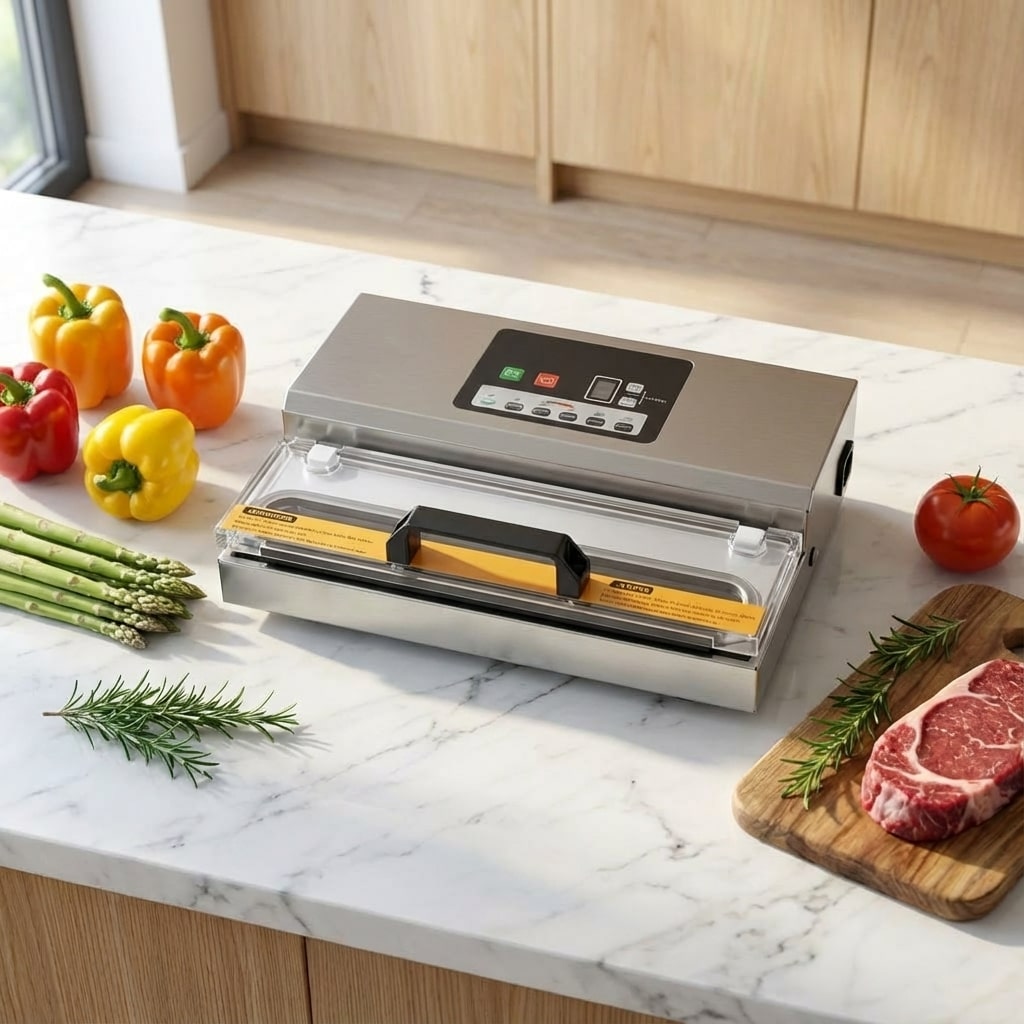
- more regular suction to limit false diagnoses linked to tightness
- versatile size for most food needs at home or in a small lab
- comfortable power to chain cycles without feeling like a fragile machine
How to extend the life of the seal without degrading the vacuum quality?
The best way to maintain an effective joint is to avoid unnecessary stress. A seal is damaged less quickly when the machine is clean, well cooled between sets and used with suitable bags.
Good habits that really change lifespan are:
- wipe the bar and the support area after greasy or moist foods;
- avoid crushing the lid unnecessarily between two cycles;
- do not force with a poorly positioned or crumpled bag;
- let the machine rest during a sustained sequence of cycles.
This discipline matters even more if you work with large pieces, marinades or tight preparation rhythms. An undersized machine puts more strain on its sealing elements and gives the impression that the seals are “failing” too quickly.
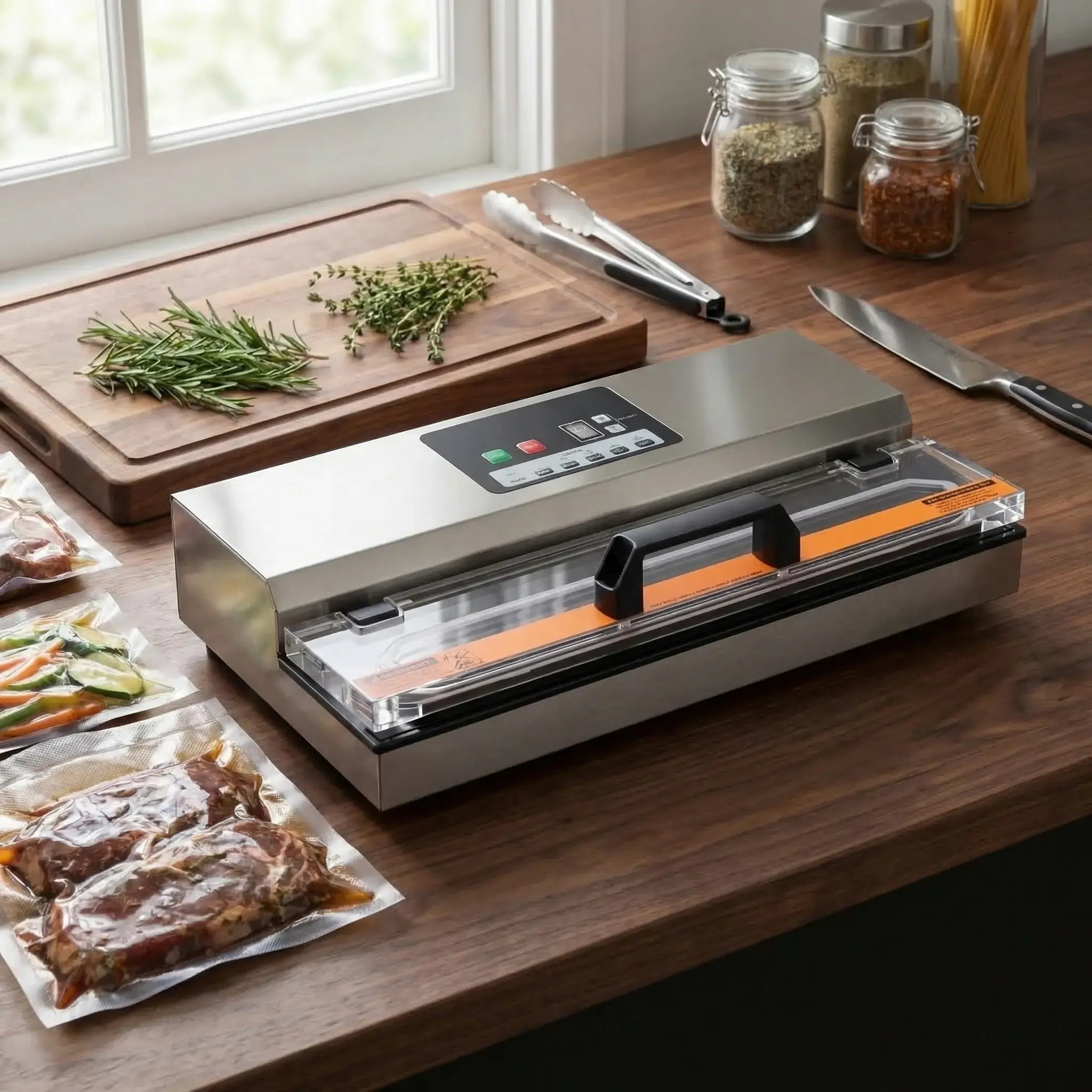
- comfortable useful width for bulky parts and larger series
- relevant upgrade when small machines become irregular
- better peace of mind to obtain constant suction for more demanding uses
Do you want to start off on a truly reliable basis?
Explore our selection of professional vacuum machinesto improve suction regularity, welding quality and comfort of use.
View the collectionVacuum Machine Seal FAQ
Can a worn seal completely prevent suction?
Yes, especially if it is flattened or cracked. The machine is then no longer able to create sufficient depression to properly empty the bag.
Should the seal be replaced at the first loss of efficiency?
No. Start by cleaning the support area, checking the positioning of the bag and retesting before deciding on a replacement.
Can a bad joint also harm the weld?
Yes, because a bag that is poorly maintained during the cycle can move and result in a less clean closure, especially with repeated use.
Which machine should you choose if sealing problems recur often?
If your production rate is sustained, it is better to upgrade to a more robust and more powerful machine than to multiply small repairs.