
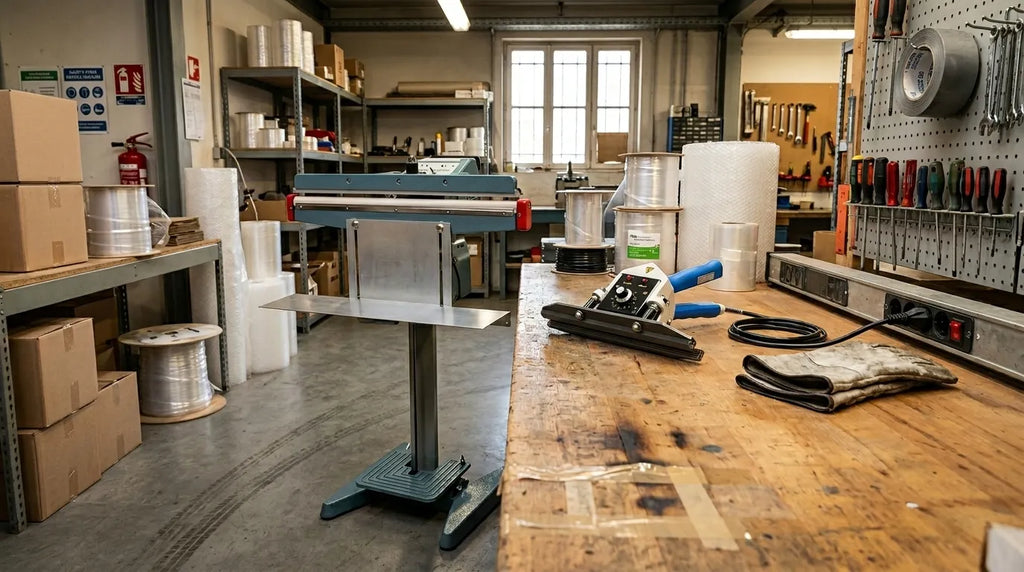
Aheat sealeris the right choice when you need to close bags cleanly, evenly and more robustly than with simple kitchen tongs. The right model depends above all on the type of bag, the production rate and the level of reliability expected on the seal.
In practice, a small structure can work with a high-performance manual model, while a workshop or an intensive packaging station will save time with a more stable free-standing machine. The goal is not to buy the biggest machine, but one that guarantees a clean closure without slowing down your flow.
What is a heat sealer really for?
A heat sealer is used toseal a heat-sealable bagby heat input. It is particularly useful when the quality of closure influences the conservation, presentation of the product or the packaging rate.
In the field, we find it for food bags, consumables, small artisanal series or technical packaging. The main interest is simple: to obtain a cleaner, more homogeneous and more reassuring weld line for the end user.
- It limits irregular closures which weaken the bag.
- It speeds up packaging compared to an improvised closure.
- It improves presentation and reduces losses linked to poorly sealed bags.
If you also work with vacuum packaging, you can usefully complete this reading withour guide to choosing the right vacuum bag machine, because the quality of the container always determines the final result.
How do you know which type of heat sealer is right for you?
The right choice depends first of all on your actual use. Before comparing models, ask yourself a simple question:close a few sachets per day or repeated series with regularity requirements?
Industry standards recommend sorting your need according to three criteria: the necessary weld width, the intensity of use and the stability expected at the workstation. It is this trio that avoids poorly calibrated purchases.
The right criteria to look at first
Here are the points that really make the difference when buying:
- Daily volume: a few sachets, small series or continuous production.
- The format of the bag: width to be sealed and thickness of the material.
- Comfort of use: manual control, mobile clamp or standing machine.
- The quality of finish: sharpness of the weld, repeatability and durability over time.
- The environment: fixed station, workshop, food preparation or multipurpose packaging.
Pro tip:The most common mistake is buying a machine that is too light for repetitive use. An undersized heat sealer not only wastes time: it also reduces the regularity of the welds and makes the operator more tired.

- Mobile and simple format to integrate into a small packaging station.
- Good solution for neatly closed bags without a bulky machine.
- Quick handling for light craft or regular use.
Manual heat sealer, clamp or standing machine: what are the differences?
The difference between these families of machines is mainly due to thework stabilityand to thecadence supported. The more repetitive your need, the more profitable stable and dedicated equipment becomes.
A heat sealer clamp remains relevant for short series or a flexible station. A stand-up machine becomes more logical when you are looking for consistent welding over a more sustained range of use.
| Kind | For what use | Highlights | Boundaries |
|---|---|---|---|
| Heat sealing pliers | Small series, mobile station, simple and quick requirements | Compact, easy to handle, small footprint | Less comfortable over long repetitive sets |
| Impulse welder | Various plastic bags, versatile use | Good speed, multiple formats, economical solution | Less intensive use oriented than a dedicated industrial model |
| Pedestal heat sealer | Sustained cadence, workshop, need for regularity | Better stability, more productive working posture, regular results | More bulky and more budget-friendly |
Verdict:If you are looking for an agile solution for closing bags neatly without installing a complete line, the heat sealing clamp is often the best compromise. For more intensive and repetitive use, a standing heat sealer quickly becomes more profitable in terms of comfort and regularity.
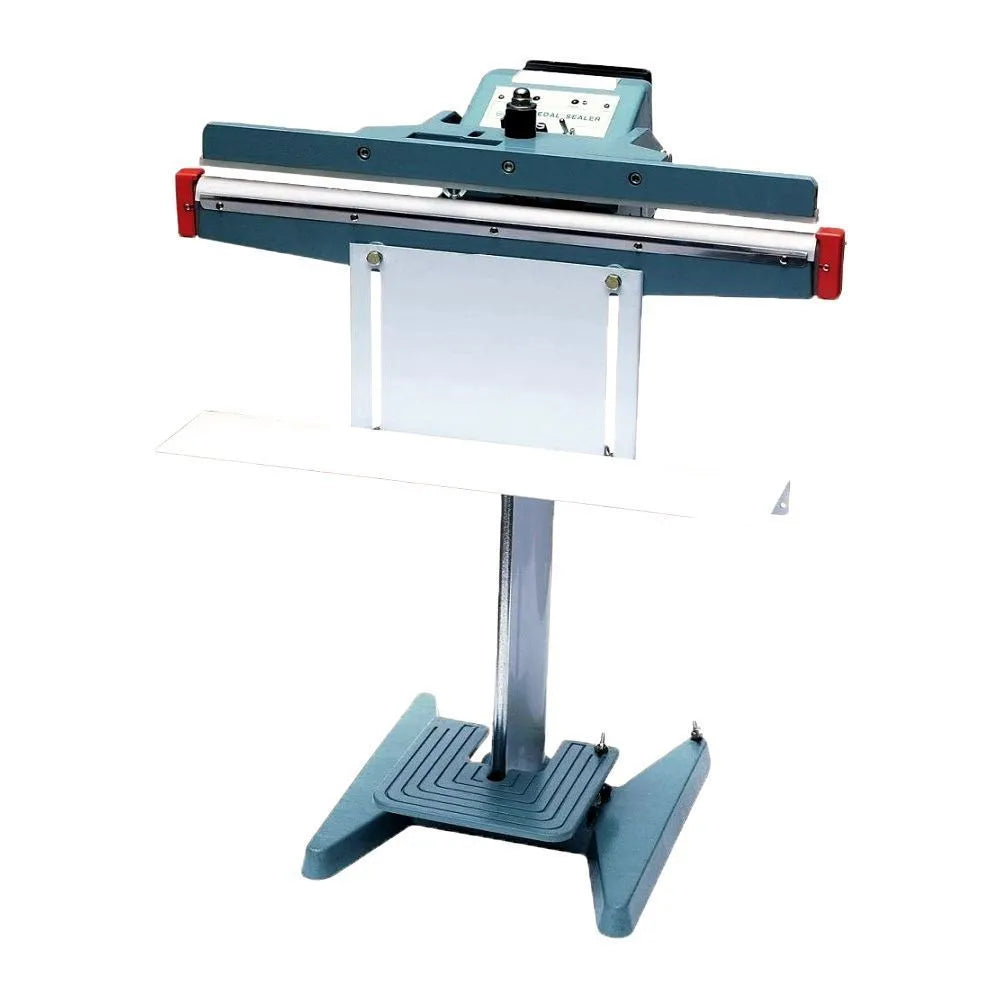
- Stable station designed for repeated series and homogeneous welds.
- Convenient foot control to keep your hands available on the bag.
- Real gain in comfort as soon as the pace increases in the workshop.
When should you upgrade a heat sealer?
You have to move upmarket when your machine becomes a brake instead of a tool. If you waste time repositioning the bags, re-sealing or managing an irregular flow, the additional cost of a better model is quickly repaid.
The clearest signs are easy to spot: uneven welds, operator fatigue, slow packaging station and the need for repeatability over longer runs. In this case, the question is no longer “does it work?”, but “does it hold the charge properly?”.
For professions that juggle between closing bags and more technical packaging, it can also be useful to compare withour article on XXL impulse welders, especially if you handle larger formats.
Finally, if your activity also involves vacuum food packaging, remember to check the entire station: machine, bag and maintenance. Reliable welding always remains the link that secures conservation.
Need a heat sealer adapted to your pace?
Explore our selection of bag models, from the compact station to the more industrial solution.
See the heat sealer collectionHeat Sealer FAQs
What is the difference between a heat sealer and an impulse sealer?
The heat sealer refers to all the machines that close a bag by heat. The impulse welder is one family, often appreciated for its simplicity and speed.
Is a heat sealer suitable for food use?
Yes, provided you use compatible bags and choose a machine adapted to your pace and your working environment.
Do you need a standing machine to properly seal your bags?
No, not always. A clamp or a manual solution is sufficient for small series, but the standing machine becomes more interesting as soon as production intensifies.
What width should I choose for a heat sealer?
Choose a width consistent with your usual bags. A machine that is too short will limit you, while a correctly sized model secures your formats without DIY.