
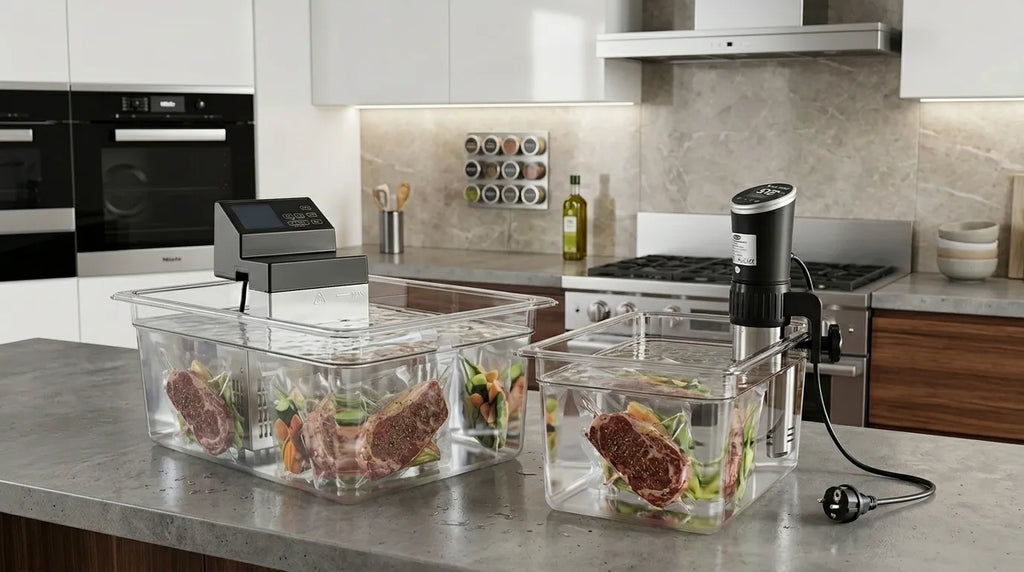
Aimmersion heateris used to maintain the water at an ultra stable temperature to achieve a successfulprecise sous vide cooking, regular and reproducible. In the kitchen, it is the most relevant tool when you want to better control low temperature cooking, avoid overcooking and gain consistency on meat, fish, eggs or vegetables.
In practice, the immersion heater does not replace a vacuum machine: it intervenesafter packaging, during cooking. It is therefore complementary equipment, particularly useful for demanding enthusiasts, caterers, restaurateurs and all those who want a real professional cooking result at home or in production.
What is an immersion heater used for in sous vide cooking?
The central question is simple:what is an immersion heater actually used for?? It is used to heat and circulate the water in a cooking bath in order to maintain a stable temperature to within a tenth of a degree depending on the model.
This stability changes everything. With perfectly regulated water, you obtain even cooking from edge to edge, without overheating and without approximation. This is exactly what professional kitchens look for when they want to repeat the same result service after service.
The immersion heater is particularly useful for:
- cook pink meat evenly without significant margin of error;
- preserve the softness of a delicate fish;
- maintain consistent texture on perfect eggs, vegetables or sensitive preparations;
- organize more predictable production by batch cooking or mise en place.
If you are still discovering the full ecosystem, you can also readour guide to getting started with sous-vide cooking at low temperature, then deepen withour article dedicated to choosing a sous vide cooker for domestic use.
Immersion heater or sous vide cooker: what difference should we understand?
Many buyers type “immersion heater” when in reality they are hesitating between several sous vide cooking formats. The short answer:the immersion heater is a module that clips onto a tank, while a sous vide cooker can be a more integrated solution with a dedicated container.
The immersion heater is often more flexible, because it adapts to different tank volumes. The compact cooker can be easier to use if you want a ready-to-use station without thinking about the container.
| Criteria | Immersion heater | Compact sous vide cooker |
|---|---|---|
| Flexibility of use | Very high, because it adapts to several containers | More limited to the size of the tank |
| Scalable capacity | Yes, depending on the size of the bin used | Not or not very scalable |
| Out-of-service footprint | Weak | More important |
| Comfort to start | Very good if you understand the principle | Excellent for simple and focused use |
| Relevance for frequent use | Very strong | Good, especially in small capacity |
Verdict:if you want flexibility, a reduced footprint and the possibility of increasing capacity, theimmersion heateris often the best choice. If you are mainly looking for a compact and very simple solution for small quantities, an integrated sous vide cooker can remain consistent.
Pro tip:The most common mistake is to choose the power only on a technical sheet. In practice, it is especially important to look atthe volume of water to stabilize, the desired service regularity and the actual frequency of use. A good, well-sized immersion heater provides more than a device “on paper” that is powerful but poorly suited to your tank.
How to choose an immersion heater suitable for your use?
To choose the right model, you must first answer a concrete question:how many servings and how often will you cook sous vide? The right purchase depends on the volume, the pace of production and the level of precision expected.
In the field, the really useful criteria are the following:
1. Power
Power influences the speed of temperature rise and the ability to maintain a stable bath. For domestic use or small production, 1000W may be sufficient. For more sustained use or larger volumes, 1500W provides greater comfort and responsiveness.
2. Thermal precision
A good immersion heater must maintain a stable temperature. It is this precision which makes it possible to obtain constant textures and to better respect recent market standards in terms of controlled sous vide cooking.
3. The bath volume supported
Not all models work equally comfortably on the same volumes. If you are cooking for two or four people, a small bath is enough. If you prepare services, long cooking times or several bags simultaneously, the useful capacity of the tray becomes a real productivity criterion.
4. Daily ergonomics
Readable screen, intuitive adjustment, stable attachment to the bin, simple cleaning: these details make a real difference in use. A device that is pleasant to handle is also a device that is used more often.
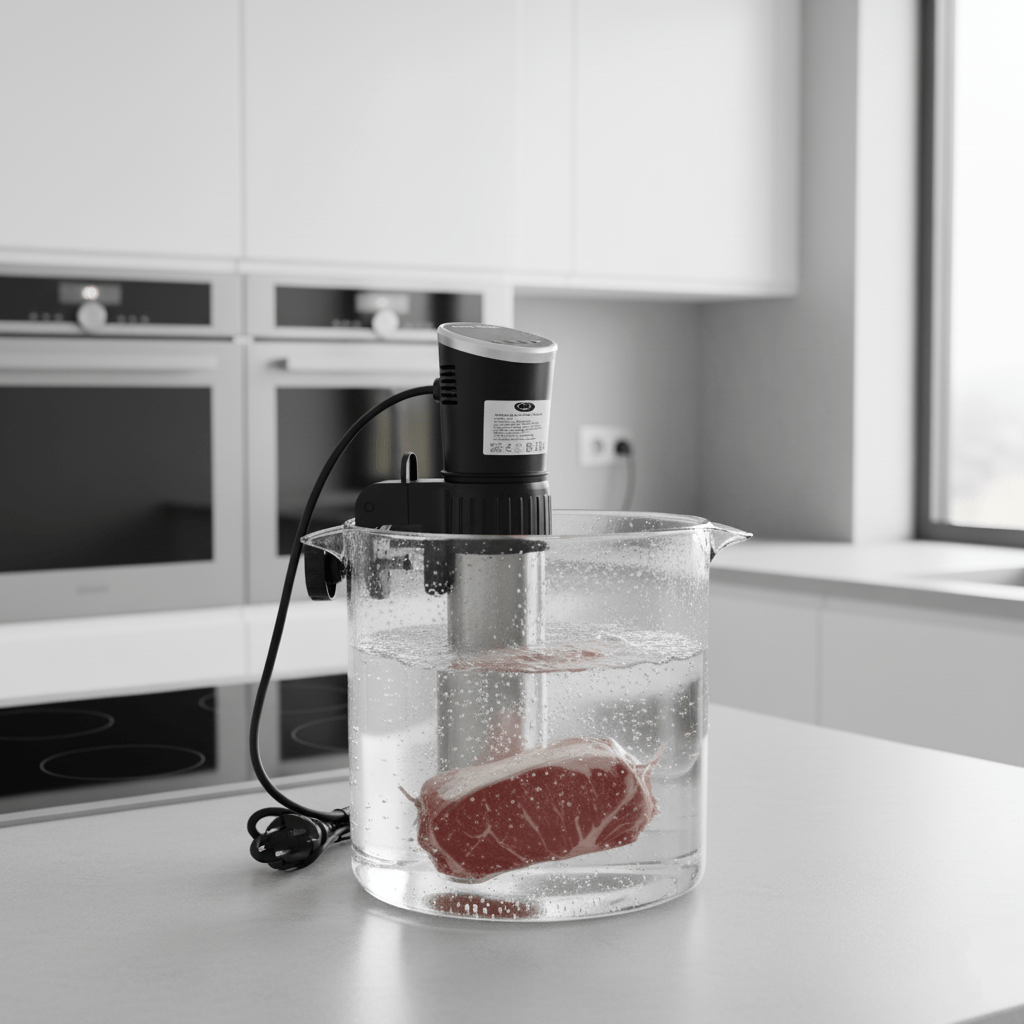
- Very good entry point to discover regular sous vide cooking
- Fine precision for meats, fish and eggs with controlled texture
- Simple format to integrate into a domestic or semi-intensive kitchen
When does an immersion heater really become profitable?
An immersion heater becomes profitable as soon as it meets a need forregularity, ofloss reductionorsaving time on installation. It is not reserved for gastronomy: it is especially interesting when you want to secure a result.
Here are the cases where its interest is most clear:
- you often cook sensitive pieces that you want to control to the nearest degree;
- you prepare several portions in advance;
- you are looking for more consistent quality than with traditional cooking;
- you want to move upmarket without switching to a heavy installation.
For a discerning homeowner, this means less overcooked meat and more repeatability. For a professional, this means better standardization, more serene organization and clearer valuation of the finished product.
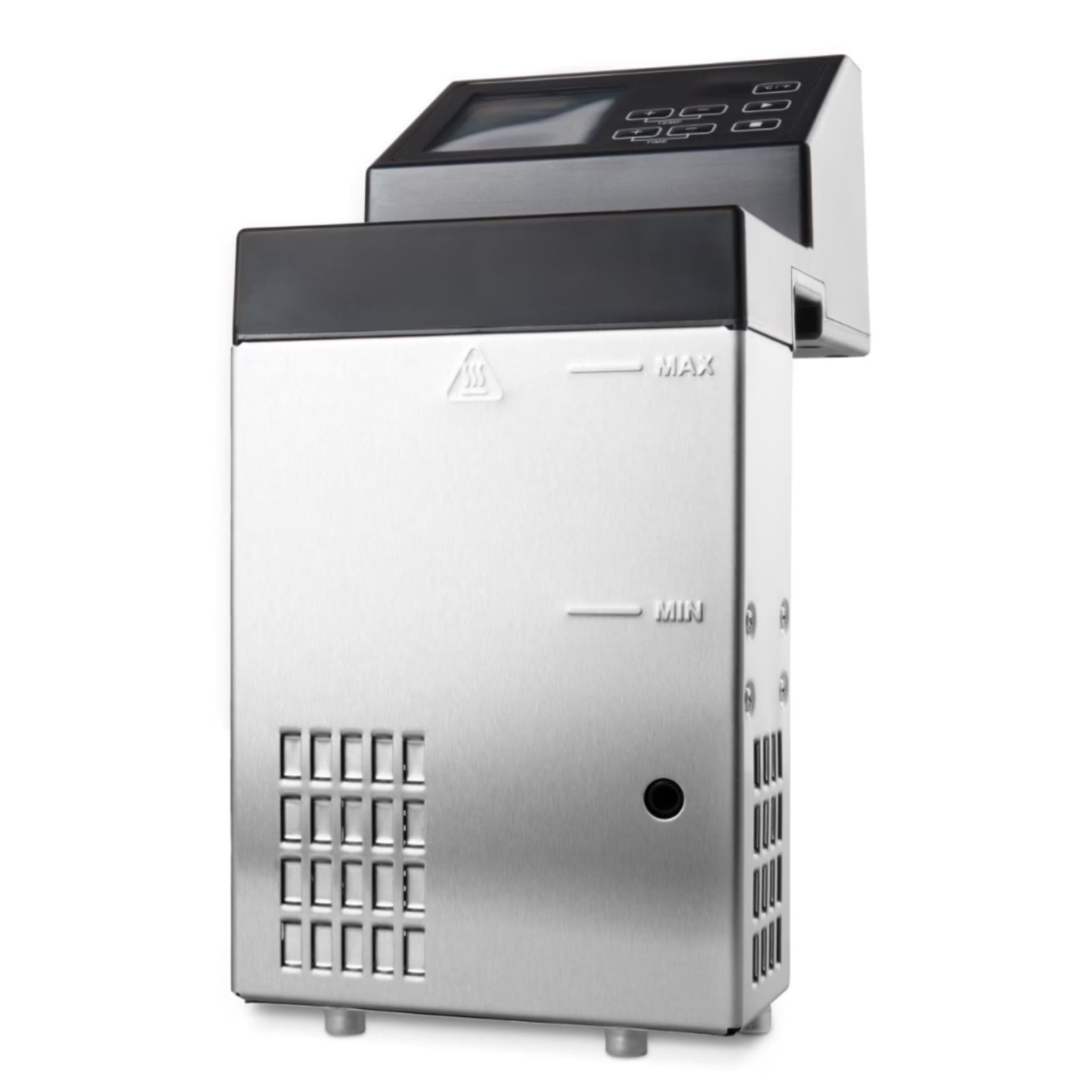
- More reserve for larger baths and repeated uses
- Ideal for gaining reactivity on temperature rises
- Better suited to sustained or professional production logic
Which immersion heater should you choose according to your profile?
To choose quickly and correctly, you must link the product to the usage profile. The direct answer:a 1000W model is often enough to get started seriously, while a more powerful and more pro-oriented model becomes relevant as soon as the volume and frequency increase.
In practice:
- Occasional use or serious discovery:choose a precise immersion heater, easy to adjust and space-saving.
- Regular use at home:favor a good compromise between precision, comfort and rapid heating.
- Intensive use, catering or catering:step up and think of a complete system with a suitable tank, production organization and rigorous temperature control.
Verdict:if you are looking for the best compromise to get into sous vide cooking with a real logic of results, aprecise 1000W immersion heateris already an excellent base. If you are short on time, work in larger volumes or want a more comfortable tool for repeated services, the1500W Roner typetakes the advantage.
Want to compare the available models?
Explore our selection dedicated to sous vide cooking to choose an immersion heater or cooker suited to your level of requirements.
See the sous vide cooking collectionImmersion Heater FAQ
Does an immersion heater replace a vacuum machine?
No. The vacuum machine is used for packaging, while the immersion heater is used to cook with precision in a regulated water bath.
Can you use an immersion heater at home?
Yes, perfectly. It is even one of the most practical formats for seriously getting started in sous vide cooking without installing heavy equipment.
What power should you choose for an immersion heater?
For everyday use, 1000W is often enough. If you cook more often, on larger volumes or with professional logic, 1500W provides more comfort.
What foods cook best with an immersion heater?
Meat, fish, eggs and certain vegetables are particularly suitable, because they directly benefit from a stable and precise temperature.