

Yes, there are severalvacuum machine spare partswhich can significantly extend the life of the device before complete replacement. In practice,the joint,the sealing bar,support foam,the filterand certain sealing consumables are the first elements to check, because they are the ones which cause the suction or the quality of the weld to drop.
The right approach is therefore not to change the entire machine at the first fault, but to check whether the breakdown comes from a simple wearing part, a lack of maintenance or a structural limit of the device. It is this sorting that allows us to avoid a false economy... or a purchase postponed for too long.
Which spare parts are most often involved?
The parts that wear out the most are not necessarily the most expensive, but they are the ones that have the most impact on the result. If your machine sucks less well, welds poorly or lets air in after a few hours, you must first look at the parts in direct contact with the bag and the vacuum system.
On an external suction machine, the most useful checks generally concern:
- the seal, which determines the quality of the suction;
- the welding bar or strip, which must heat regularly;
- teflon tape, which protects the weld and limits sticking;
- pressure foam, often forgotten even though it provides correct support;
- filters or liquid separators, useful when juices rise;
- the lid, hinges or latch, when the closure is no longer stable.
If your device is especially showing a decline in performance, these parts are worth looking into before considering a full replacement. To go further on interview logic, you can also readour article on maintaining a vacuum machine.

- More serious construction to limit premature replacements
- Clean and regular welding for frequent use at home or in small production
- Versatile format when you want to move upmarket without going to the bell
When is it really worth replacing a part?
Replacing a spare part is profitable if the fault is isolated, if the machine maintains correct suction and if the total cost remains reasonable in relation to the value of the device. Clearly, changing a seal, foam or protective tape makes sense; replacing several components on a tired entry-level machine often takes much less.
The right reflex consists of distinguishing three situations:
| Situation | Part likely involved | Good decision |
|---|---|---|
| The vacuum is bad but the machine starts normally | Gasket, foam, cover, clogging | Check and replace the wearing part |
| The weld is irregular or incomplete | Sealing bar, Teflon, closing pressure | Repair if the device is still healthy |
| Repeated breakdowns, tired motor, unstable electronics | Heavier pump or internal assembly | Compare the actual cost and consider a more robust machine |
Verdict:as long as the breakdown is limited to a simple wearing part, repair is often defensible. On the other hand, if the faults accumulate or come back quickly, it is better to switch to a more stable device rather than piling up the repairs.
Field advice:a machine that “lacks suction” does not necessarily have a dead pump. Very often, the problem comes from a compacted seal, a damp bag edge or a closing element that no longer provides enough pressure.
How do you know if the part to be changed is really enough?
To answer this question honestly, one must test the machine under clean and simple conditions. The objective is to confirm whether the failure really comes from a specific part or whether the device has reached its reliability limit.
Before ordering anything, do these checks in order:
- Clean the soldering and suction areato remove grease, crumbs and moisture.
- Try with a compatible bagand a dry edge to avoid a false diagnosis.
- Visually inspect the joint: crack, crushing, lack of elasticity.
- Check the solder strip: burn marks, stuck areas, irregular heating.
- Do several short cyclesto see if the failure is constant or random.
If, despite this, the machine no longer pumps correctly, you can supplement withour useful checks when a vacuum machine no longer pumps. This allows you to sort between a simple repair and a real need for replacement.
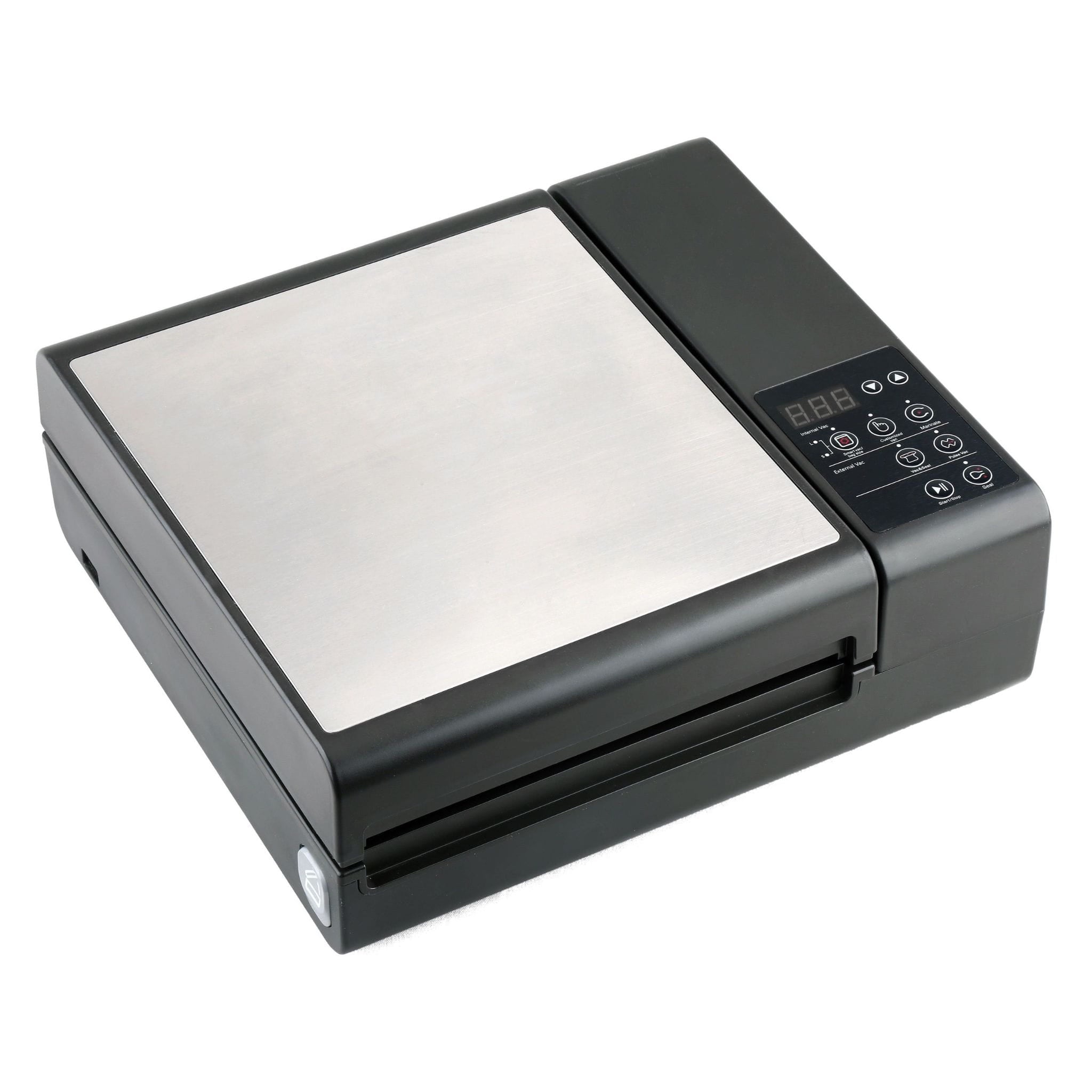
- Best suited if you often package moist or marinated products
- More stable work when an external machine shows its limits
- Consistent upgrade if you repair your old device too often
Which parts are worth changing...and which are the end?
The real question is not only “can we repair?”, but “do we still need to repair?”. Some parts make sense to replace because they are designed to wear out; others mainly point out that the machine is no longer suited to your pace or your uses.
In practice, it is relevant to replace:
- a jointwho no longer tackles correctly;
- a solder stripdamaged or worn Teflon tape;
- a support foampacked which hinders closing;
- a small recovery accessoryif the liquids have ended up altering it.
Conversely, if your device heats up poorly, fatigues over short series, handles humidity poorly or requires several interventions at close intervals, the breakdown often reveals a design or undersizing problem. In this case, replacing a part can help out for a few weeks, but does not solve the root of the problem.
Need a more reliable machine than your old model?
If the repairs pile up, it is better to start on a healthy basis with a machine that is really designed to last and weld cleanly.
See professional vacuum machinesVacuum machine spare parts FAQ
What are the most often replaced parts on a vacuum machine?
The seal, the backing foam, the sealing strip and the Teflon tape are the most frequent replacements, because they directly influence the vacuum and the closure of the bag.
Should a machine that no longer pumps always need to be replaced?
No. A loss of suction can come from a tired seal, clogging or a bad bag before revealing a more serious failure.
Is it profitable to repair an entry-level vacuum machine?
Yes for a small, inexpensive wear part; much less if several defects accumulate or if the machine already shows production and welding limits.
When should you upgrade to a more robust machine?
As soon as repairs are repeated, soldering becomes random or your uses clearly exceed the capabilities of your current device.