

The instructions for using a Silvercrest vacuum machine are based on simple logic: choose a suitable embossed bag, leave a clean margin above the food, then start the vacuum before sealing. In practice, these models are suitable for occasional use, but their limitations quickly become apparent as soon as moist foods or thick portions are often packaged.
If you are looking to use your device properly without wasting bags or losing conservation, here are the right actions, the mistakes to avoid and the cases where a more robust alternative becomes preferable.
How to use a Silvercrest vacuum machine correctly?
To properly use a Silvercrest vacuum machine, you must above all respect the preparation of the bag and the humidity level of the food. The machine vacuums correctly if the opening of the bag is perfectly dry, flat and placed in the right place on the sealing bar.
The principle remains the same as on any machine with external suction: the air is extracted from the bag, then the machine performs a thermal seal to hermetically close the packaging. If you want to understand this mechanism in more detail, you can also readhow does a vacuum machine work.
- Choose an embossed bagcompatible with machines with external suction.
- Leave 5 to 8 cm marginbetween the food and the top of the bag.
- Wipe carefullyinside the bag at the level of the future seal.
- Place the opening flaton the area intended by the machine.
- Close the hood firmlybefore starting the cycle.
- Check the weld: it must be straight, clean and continuous.
This method is sufficient for dry foods, single portions and occasional household use.
What are the steps in the daily instructions for use?
On a daily basis, use comes down to a short sequence: prepare, vacuum, weld, check. It's the details of execution that make the difference between a well-preserved sachet and an air leak after a few hours.
1. Prepare the food
The most useful answer is simple: the colder, cleaner and drier the surface of the food, the easier it is to vacuum seal. Very juicy, marinated or sauced foods require more precautions.
In practice, let the preparations cool, dab off excess liquid and avoid filling the bag too high.
2. Cut the correct bag size
You should take a bag that is neither too short nor too wide. A bag that is too tight hinders suction, while an unnecessarily large bag increases waste of consumables.
For a machine of this type, the good compromise is to provide enough space for the air to circulate towards the pump without the food rising onto the welding zone.
Field advice:for slightly moist foods, place the bag in the freezer for a few minutes before the cycle. This limits the rise of juice and significantly improves the quality of welding on domestic machines.
3. Start the suction then the welding
The machine must first remove the air, then close the bag neatly. If the suction seems weak, the problem is often a poorly positioned bag, a tired seal or a poorly latched lid.
On entry-level models, you sometimes have to press hard on both sides to ensure a seal during the cycle.
4. Control the result
Successful packaging is immediately recognizable: the bag fits the product well, without large air pockets, and the seal forms a regular line. If the line is incomplete or if the air returns quickly, you must start again with a new clean margin.
What limits should you be aware of before following Silvercrest instructions for use?
Yes, these machines can be useful, but they quickly show their limits as soon as use becomes frequent. The short answer: they are adapted to an occasional need, less to a search for regularity, power and comfort.
The most common limits are suction force, liquid tolerance, weld width, and endurance over multiple cycles in a row. This is precisely why many users consult a more complete feedback on Silvercrest models before purchasing or replacing their device:Vacuum machine Lidl (Silvercrest): reviews & professional alternatives.
| Criteria | Silvercrest / occasional use | More robust machine |
|---|---|---|
| Frequency of use | Occasional use, small series | Regular use, several successive cycles |
| Wet food | More delicate management, risk of leakage | Better control of suction and welding |
| Comfort of use | More manual, more sensitive to good placement | More stable, faster, more consistent result |
| Width / versatility | Limited according to sachets and portions | More suitable for large volumes and intensive use |
Verdict:if you pack a few servings every now and then, one Silvercrest may be enough. On the other hand, to freeze regularly, prepare in batches or work on larger pieces, it quickly becomes more profitable to switch to a more reliable machine.
What alternatives should you choose if you want more reliability?
If you are looking for an alternative to the “to watch out for” instructions for entry-level machines, you should aim for a device that is more forgiving of small handling deviations. The best answer depends mainly on your frequency of use and the volume of products to be packaged.
For serious or semi-regular domestic use, a well-built external machine already brings a real leap in comfort. For larger parts or a need for speed, it is better to choose a more generous welding bar directly.
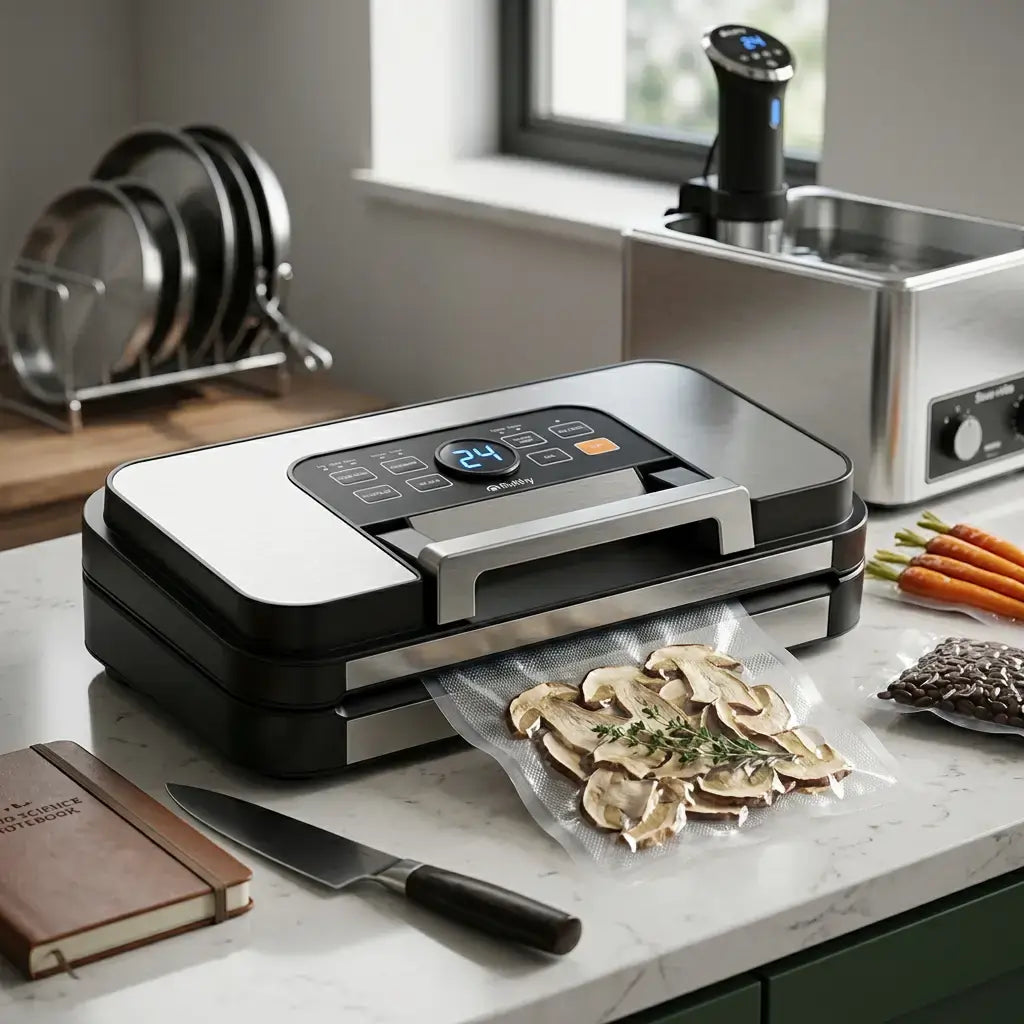
- Reassuring double seal for freezing and delicate foods
- Simple handling to replace an entry-level machine
- Good compromise for more regular home use
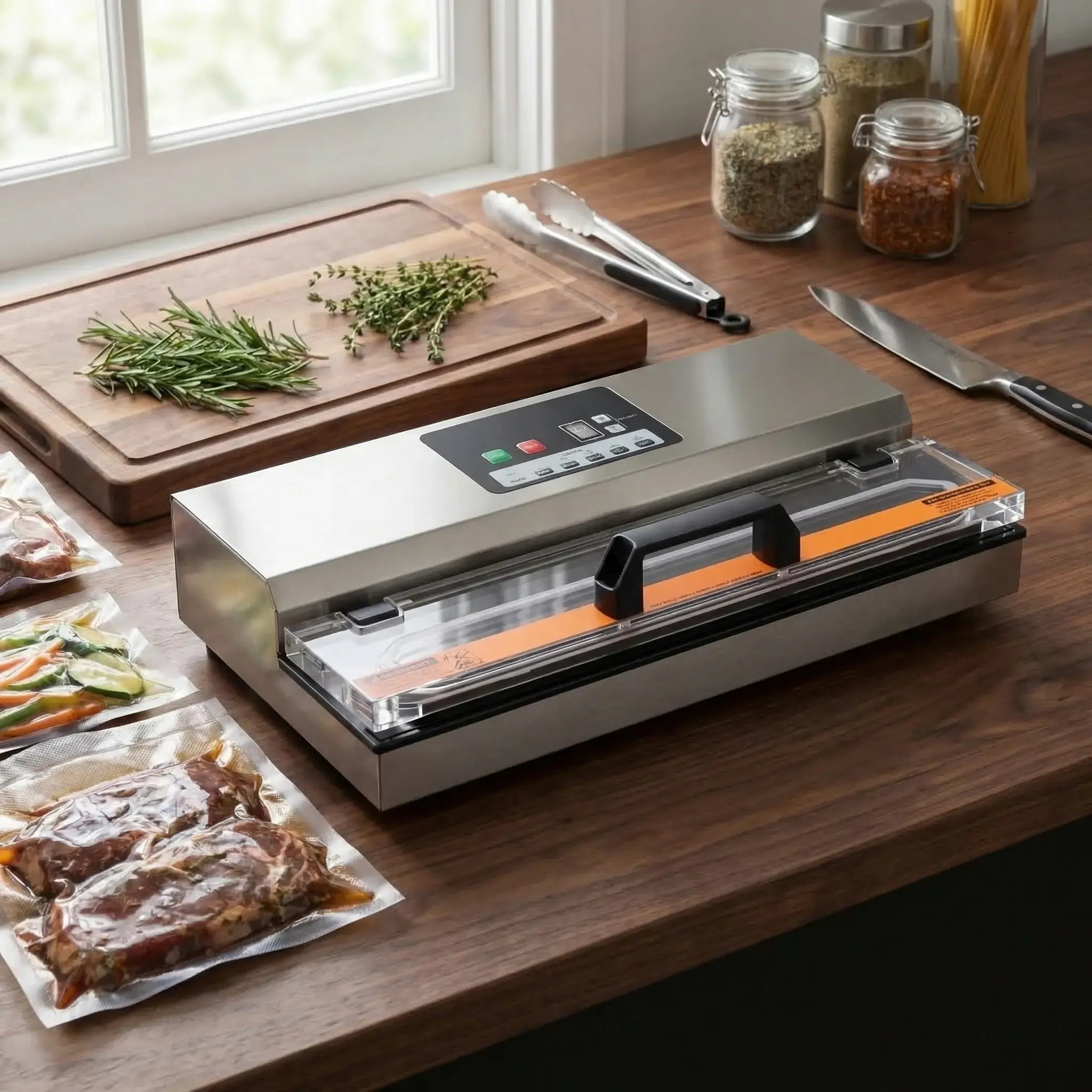
- 40 cm bar ideal for large pieces and wide bags
- More comfortable power for demanding users
- More consistent result when the packaging rate increases
What to do if the machine does not vacuum well or welds poorly?
When a Silvercrest vacuum machine does not vacuum well, the cause is often simple: unsuitable bag, damp area, dirty seal or insufficiently locked cover. The preparation must first be corrected before blaming the pump.
The priority controls are as follows:
- Check bag type: External machines require embossed bags.
- Clean the seal and the barto avoid leaks.
- Dry the opening thoroughlyof the sachet.
- Reduce the amount of liquidor prefreeze slightly.
- Redo a cycle with more marginabove the product.
In practice, the most common mistake is wanting to pack wet food too quickly. But good conservation always begins with impeccable welding.
Need a more reliable machine than your current model?
Compare models designed for more regular, cleaner and more reassuring vacuuming on a daily basis.
See the collection of vacuum machinesFAQs
How to properly close the cover of a Silvercrest vacuum machine?
You must press firmly until completely locked on both sides, otherwise the suction will be incomplete.
Can we use smooth bags with a Silvercrest machine?
No, in most cases embossed bags are required to allow air to circulate to the pump.
Why does the machine weld but not evacuate?
The problem often comes from a poorly positioned bag, a damp opening or a seal that no longer ensures a seal.
When should you replace a domestic vacuum machine with a more robust model?
As soon as you often package wet products or bulky portions, a sturdier machine quickly becomes more comfortable and cost-effective.