
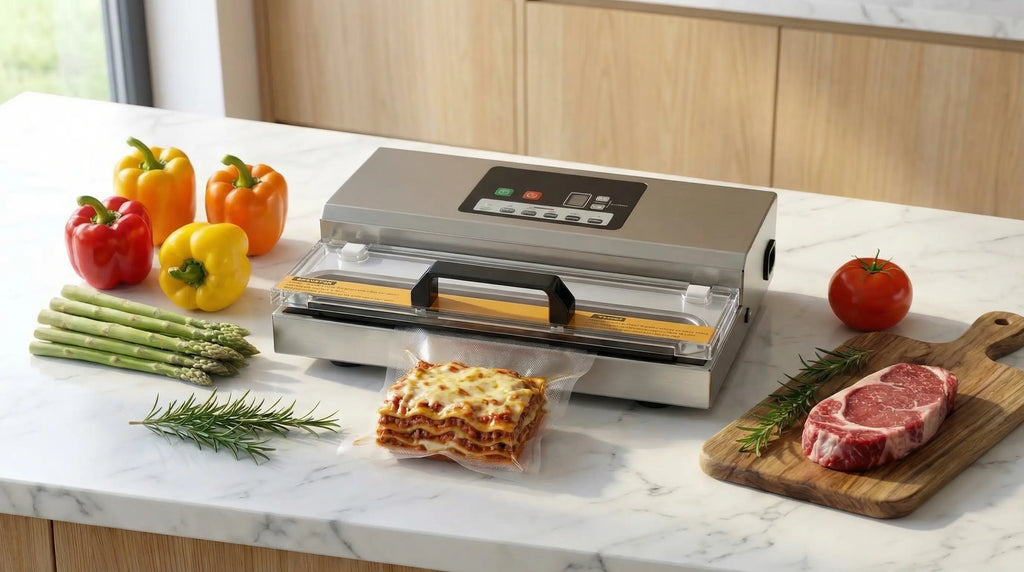
Afood vacuum machineserves to extend conservation, better organize stocks and limit waste, provided you choose a model consistent with your volumes and the types of food processed. For regular use, the decisive points are above all the quality of suction, the width of the seal, compatibility with bags and the ability to handle fragile or damp products.
In other words, you should not choose the cheapest machine out of reflex, but the one that will remain reliable when you are packing meat, fish, cooked portions or preparations for freezing. This is what makes the difference between an additional purchase and a real conservation tool.
What is a food vacuum machine really for?
The real question is simple: why use a vacuum machine for everyday foods? The short answer is that it improves preservation, reduces oxidation and makes storage cleaner, both in the refrigerator and in the freezer.
In practice, removing the air around the product slows spoilage, better protects the textures and helps with precise portioning. It is useful for meat, fish, cheeses, certain blanched vegetables, prepared meals and products intended for sous vide cooking.
- Limit freezer cold burns
- Prepare clean portions for batch cooking
- Better store air-sensitive foods
- Save space in the refrigerator and freezer compartments
What criteria should you look at before buying?
The right question is not only “which machine is powerful?”, but “which machine is suitable for the foods I package most often?”. The direct answer: you must first check the welding quality, then the real versatility of the machine.
In the field, the most common mistake is to only look at the price or the advertised vacuum level. However, for various foods, the most useful criteria are the following:
1. Welding bar width
A 30 to 31 cm bar already covers many domestic uses. If you are packing large pieces, family portions or series of larger bags, a 40 cm machine becomes much more comfortable.
2. Suction quality and regularity
Powerful suction is only useful if it remains stable from one bag to the next. For food, consistency matters more than an isolated marketing number.
3. Managing wet or fragile foods
Marinated meats, fish, slightly moist products or delicate fruits require more control. If you often process this type of food, it may be relevant to compare with avacuum machine for liquidsor, ultimately, a bell machine.
4. The actual cost of consumables
A good machine must remain easy to feed with compatible bags. The usage budget counts almost as much as the initial purchase price.
Field advice:if you mainly package dry or low-moisture foods, a reliable external machine is more than enough. On the other hand, as soon as you often package preparations with juices, marinades or sauces, you must increase the cycle control or consider the bell.
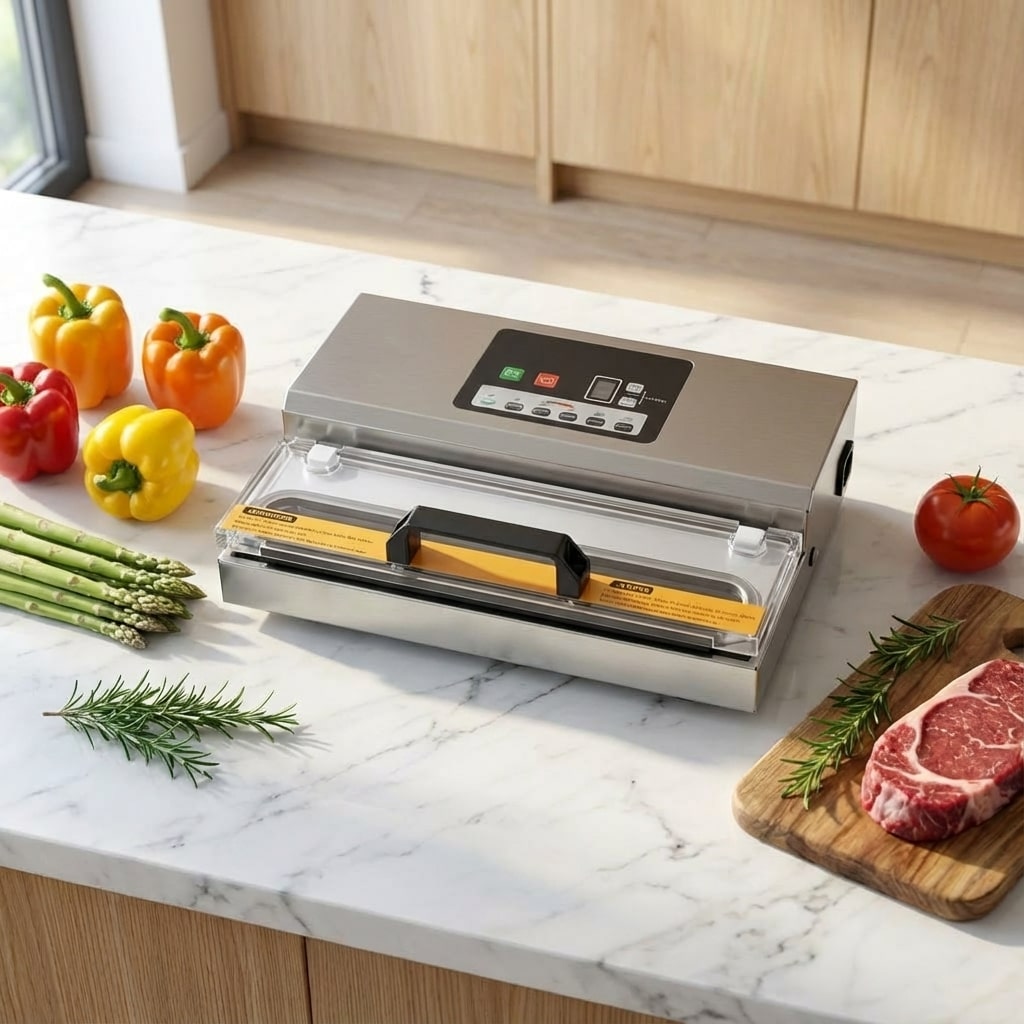
- Versatile size for most everyday foods
- Good base for freezing, portioning and batch cooking
- More reassuring construction than an entry-level gadget model
Which machine should you choose according to your usage profile?
The question to ask yourself is: do you use your machine occasionally, every week, or almost every day? The quick answer is that light use does not require the same level of endurance as heavy or all-around use.
For simple-to-pack foods and a typical household pace, a well-designed external machine is sufficient in the majority of cases. As soon as volumes increase, bags become wider or throughput increases, a more robust machine becomes profitable.
| Profile | Type of food | Recommended machine | For what |
|---|---|---|---|
| Occasional use | Meats, leftovers, blanched vegetables, cheeses | External machine 31 cm | Good compromise between simplicity, size and budget |
| Regular use | Family portions, frequent freezing, batch cooking | Robust external machine | Better vacuum and weld consistency over time |
| Intensive use or more technical foods | Wet preparations, high throughput, large formats | Wide machine or bell machine | More comfort, fewer weld failures and more versatility |
Verdict:If you're packing mostly everyday foods, a good external machine is the best place to start. If you lack margin on the width of the bags or if you often work in quantity, it is better to move directly to a more robust model to avoid too rapid replacement.
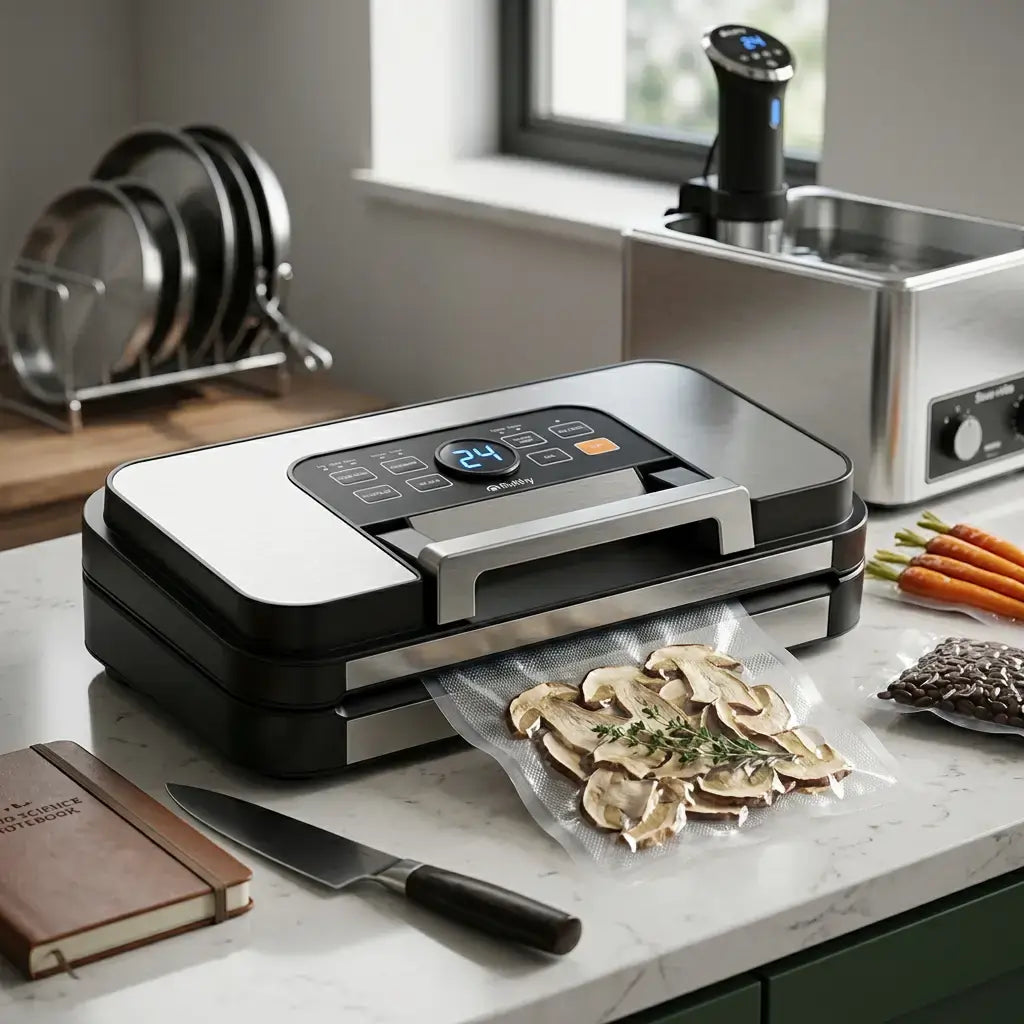
- Useful double welding for more secure packaging
- Good solution for sustained domestic use
- Comes with bags for a quick start
What mistakes to avoid with vacuum-packed foods?
The important question is not only “which machine to buy?”, but “how to avoid errors that spoil conservation?”. The short answer: even a good machine gives poor results if the bag, humidity level or storage temperature are poorly managed.
Recent market standards remind us that a vacuum machine improves conservation, but never replaces the cold chain. We must therefore remain rigorous on the nature of the packaged foods and their storage after vacuuming.
- Do not bag a wet edge without wiping it before welding
- Do not overload the bag to the point of hindering suction
- Do not confuse vacuuming and sterilization
- Do not use a bag that is unsuitable for your machine
To go further on the choice of consumables, our guideembossed or smooth bags: which bag for your vacuum machine?helps to avoid the most common incompatibilities.
Need a machine adapted to your food?
Compare the most reliable models for conservation, freezing and regular use at home or in a light professional environment.
See the collection of vacuum machinesFAQs
Which food vacuum machine should you choose to start with?
A reliable external model in 30 to 31 cm is often the best starting point for packing meat, fish, leftovers and portions for freezing.
Can all foods be vacuum sealed?
No, certain foods that are fragile, very humid or requiring special health precautions require a more method or another type of machine.
Is a vacuum machine enough to store better in the freezer?
Yes, it greatly helps to limit oxidation and cold burns, provided you use suitable bags and respect the cold chain.
Do you need a chamber machine to package wet foods?
Not always, but as soon as you often process juices, marinades or liquid preparations, the chamber machine becomes significantly more comfortable.