
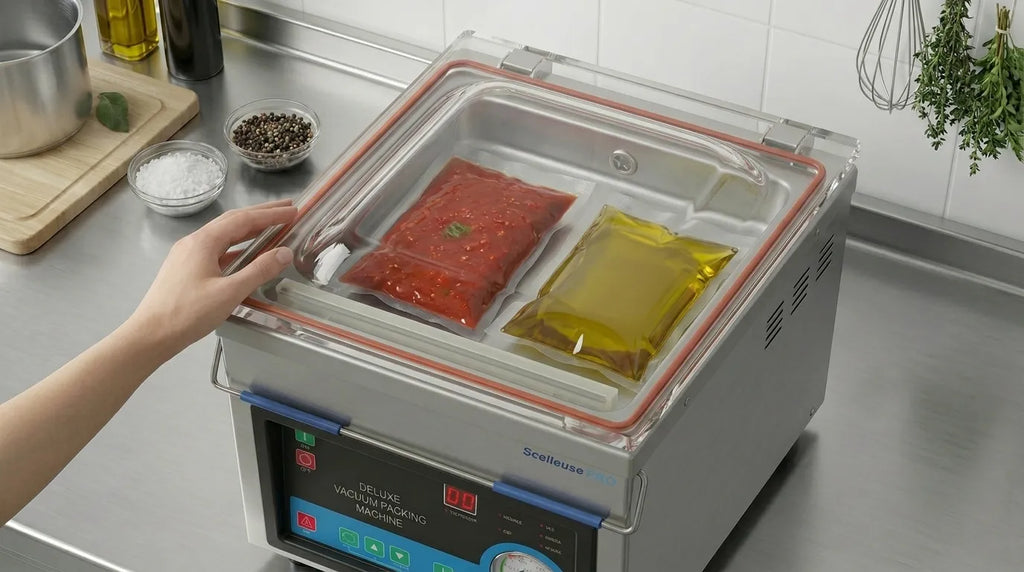
Yes, it is possible to vacuum seal liquids, but not with just any machine or method. For sauces, soups, broths or marinades, the real issue is not only the aspiration: it is tokeep a clean seal without liquid rising in the pumpand without losing hygiene or regularity.
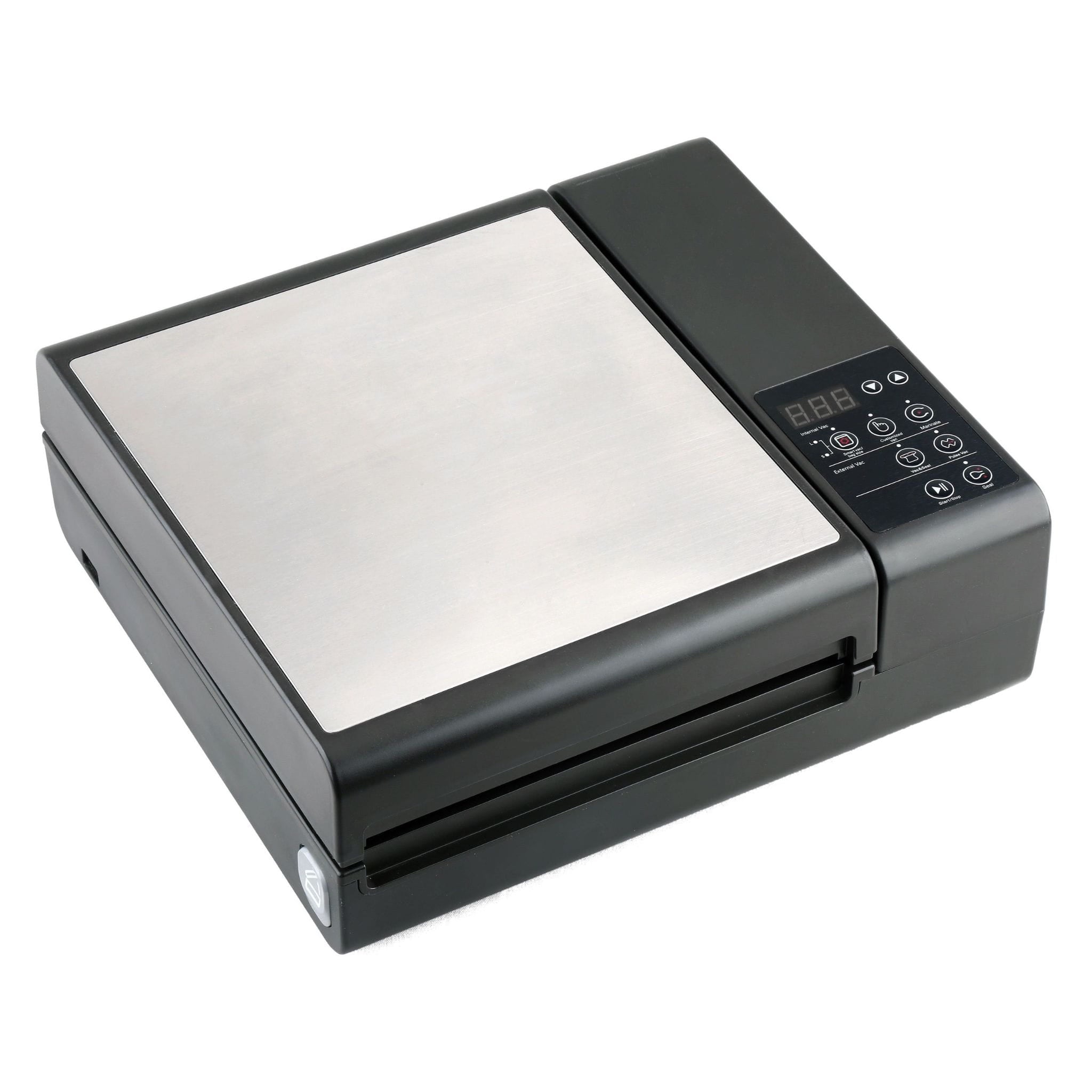
- Ideal for neatly packaging sauces, soups and marinades
- More peaceful use than an external machine on wet products
- Compact format suitable for a workshop, lab or demanding kitchen
In practice, abell vacuum machineis the most reliable solution for working with liquids. A machine with external suction can help with certain uses, provided that certain specific precautions are respected.
Which vacuum machine should you choose for liquids?
For liquids, the short answer is simple:the bell machine remains the best option. It places the entire chamber under vacuum, which avoids direct suction of the liquid towards the pump as with an external machine.
In the field, it's the difference that changes everything between occasional, somewhat delicate use and smooth, repeatable and clean use. To learn more about the subject, you can also read our other courseCan liquid be vacuum-packed?as well as our decryption onthe operation of a bell vacuum machine.
| Criteria | External machine | Bell machine |
|---|---|---|
| Liquid management | Possible, but sensitive to rises | Excellent, designed for this |
| Risk to the pump | Higher if we go too far | Weak in normal use |
| Comfort of use | Request for vigilance | Very regular and fast |
| Recommended use | Small marinades, wet foods, troubleshooting | Soups, sauces, juices, semi-liquid preparations, frequent use |
The right reflex:for liquids, the real difference does not come down to raw power, but to the machine technology used.
Why are liquids a problem with some machines?
Liquids pose a problem because they are mobile, rise quickly in the bag and can reach the sealing zone before the end of the cycle. The immediate consequence is aimperfect weld, and the medium-term consequence may be clogging of the machine.
With an external machine, air is drawn through the opening of the bag. If a sauce, gravy or marinade gets too close to this area, the machine may suck up liquid with the air. The most common mistake is filling the bag too high or wanting to achieve maximum vacuum without interrupting the cycle at the right time.
The latest generations of chamber machines avoid this problem by vacuuming the entire chamber. The pressure is better balanced, the liquid sometimes boils slightly under the effect of the vacuum, but it is not sucked into the pump in the same way as with an external machine.
In what cases can an external machine suffice?
An external machine may be sufficient if you work with liquids occasionally and methodically. This is not the most comfortable solution, but it may be suitable for well-defined domestic uses.
In practice, it works mainly for:
- very moist foodsrather than completely liquid, like marinated meat or seasoned vegetables;
- pre-cooled liquids, more stable during suction;
- small quantities, with a low filling level in the bag;
- cycles interrupted manuallyjust before the liquid rises.
If you regularly prepare soups, stocks, homemade sauces or ready-to-heat portions, the external machine quickly becomes less practical. You then save time, cleanliness and consistency by switching to a chamber machine.
How to put a liquid under vacuum without leaking or failed welding?
The correct method is tostabilize the liquid before packaging, leave a clean margin at the top of the bag and adapt the type of machine to the level of constraint. The goal is not to force the vacuum at all costs, but to obtain a clean, secure and durable closure.
Here is the most reliable method:
- Coolthe liquid before vacuum packaging, especially if it has just been cooked.
- Do not overfill the bagin order to maintain a wide and dry weld zone.
- Carefully wipe the inside of the top of the bagif projections have affected the closure zone.
- Pre-freeze lightlyif the product is very fluid or if you are using an external machine.
- Check the weldafter the cycle: it must be regular, continuous and wrinkle-free.
This simple discipline greatly improves the result, even on delicate preparations such as a velouté, a bisque, a reduced juice or a marinade base.
Which model should you choose based on your actual use?
The right choice depends above all on the volume to be treated, the frequency of use and the type of preparation. For occasional use, a good external machine may be suitable; for recurring use with liquids, the bell quickly becomes the most rational choice.
You can orient yourself like this:
- Occasional use at home: good quality external machine, especially for moist foods and small marinades.
- Regular use with sauces and soups: compact bell machine.
- Intensive use or more sustained production: more powerful bell machine, with superior chamber and pump.
If you need to package liquid preparations several times a week, the higher initial cost of a chamber machine is quickly justified by the comfort, reliability and fewer missed sachets.
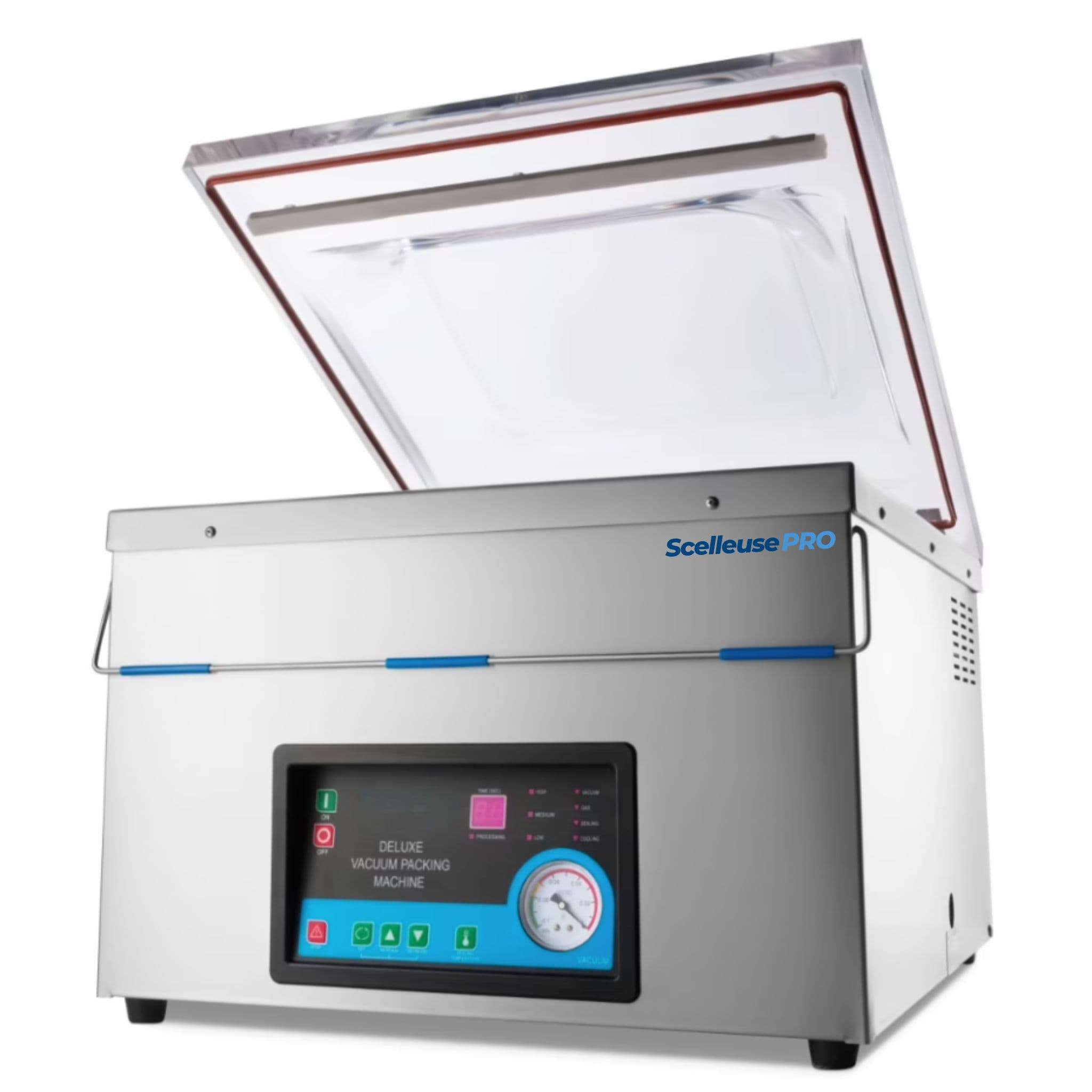
- More suitable for large volumes and repeated series
- Generous chamber for larger bags and heavier preparations
- Excellent choice for a professional kitchen, laboratory or sustained production
Mistakes to avoid when vacuum packaging liquids
For liquids, the direct answer is that you must above all avoid errors in preparing the sachet. They are the ones that cause the majority of failures, much more than the machine itself.
The most common pitfalls are:
- fill the bag too high, which leaves too little welding margin;
- pack hot liquid, more mobile and more difficult to stabilize;
- use an external machine for intensive liquid use, while a bell would be more logical;
- neglect cleaningafter a rise of product;
- choose an unsuitable bagto the type of machine and the volume to be packaged.
In practice, successful vacuum packaging of liquids relies on three simple levers:good machine, good filling level, good welding. As soon as one of the three is missing, the result deteriorates quickly.
FAQs
Can you vacuum-pack a soup with a traditional machine?
Yes, but it’s tricky with an external machine. A bell machine is clearly more suitable for this type of preparation.
Why does liquid come up into the bag during suction?
Because the vacuum draws air towards the outlet of the bag and carries the liquid with it if the filling is too high or too fluid.
Should a liquid be lightly frozen before vacuum packaging?
Yes, it’s a very good tip with an external machine to limit lifts and secure the weld.
What type of machine should you choose for frequent marinades?
If you often work with this type of preparation, a vacuum chamber machine is the most reliable and comfortable choice.
Need to package sauces, soups or marinades more securely?
Discover our dedicated collection to choose a chamber machine suitable for liquids, from compact uses to higher volumes.
View chamber vacuum machines