
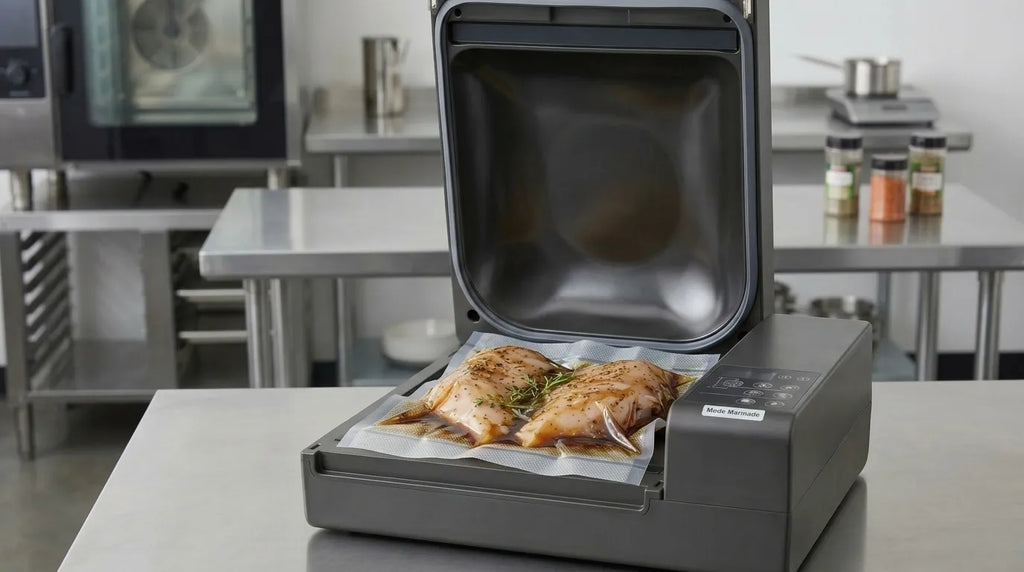
No, not all vacuum sealers require oil. In practice, oil mainly concerns certain chamber machines equipped with a lubricated pump, whereas an external machine or a dry pump chamber machine operates without this consumable. To avoid costly breakdowns or unnecessary maintenance, you must first identify the exact pump typeof your device.
When do you really need oil in a vacuum sealer?
The real question is simple:does your pump need it by design? If the answer is no, adding oil serves no purpose. If the answer is yes, neglecting the oil level or quality can cause vacuum performance to drop and wear out the pump faster.
In the world of vacuum sealing, three cases are generally distinguished:
- External vacuum sealer: no oil to add in normal use.
- Chamber vacuum sealer with dry pump: no oil either.
- Chamber vacuum sealer with oil-lubricated pump: oil check and replacement to be planned according to the usage rhythm.
If you are still unsure about the general operation of a device, you can also read: how a vacuum sealer works.
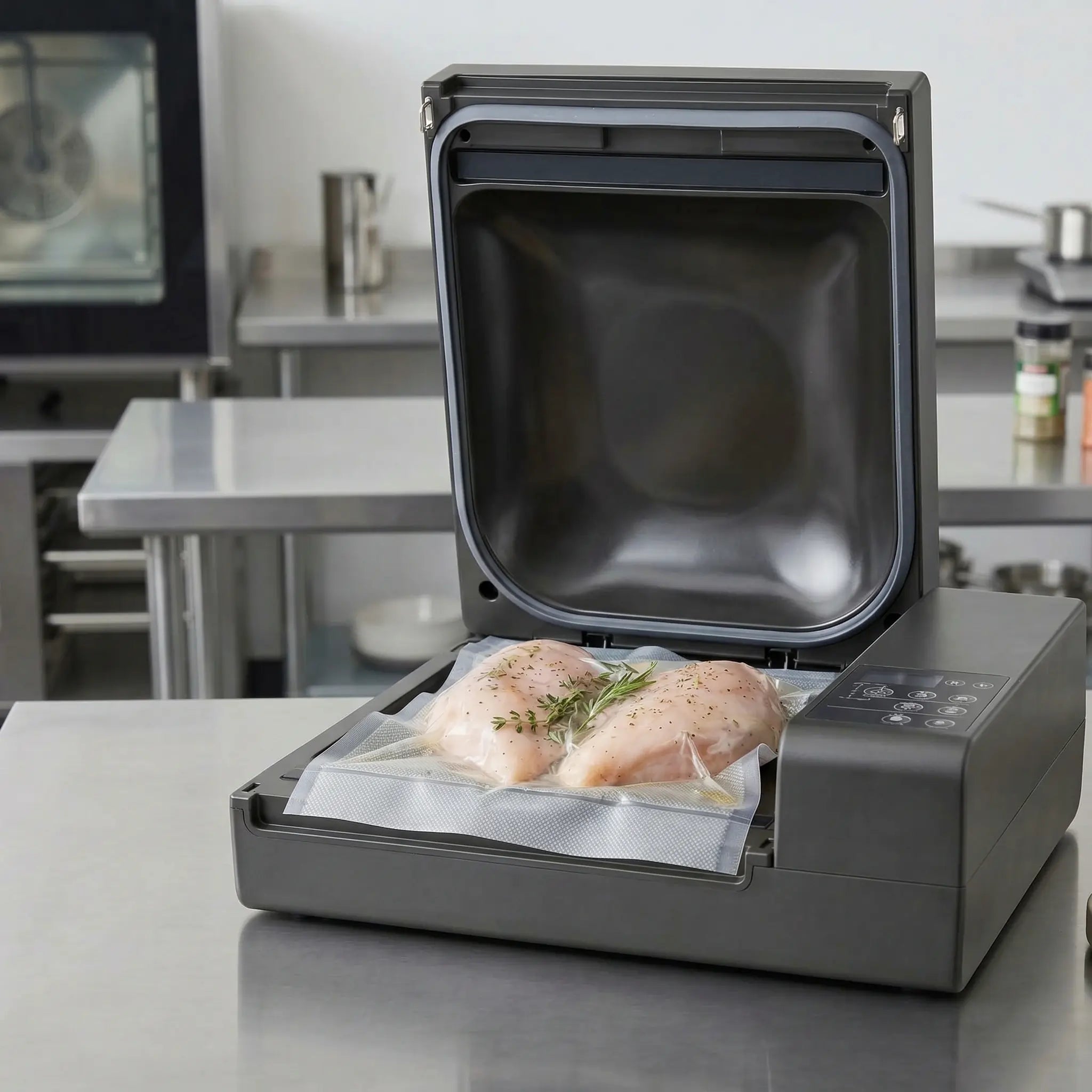
- Chamber technology ideal for vacuum sealing sauces, soups, and marinades without liquid rising into the machine
- Compact 38 x 34 cm format, easier to keep on a countertop than a bulky professional chamber machine
- Compatible with cheaper smooth bags and oil-free dry pump, practical for reducing daily running costs
How to tell if your vacuum sealer uses a lubricated pump?
The most reliable way is to consult the technical data sheet, manual, or manufacturer's description.The word "chamber" is not enough, as some chamber machines operate with a dry pump, others with a lubricated pump.
Here are the most useful clues:
- presence of aoil level indicator or sight glass,
- instruction fortop-up or drainage in the manual,
- explicit mention ofoil bath pumpor a lubricated pump,
- machine designed for a sustained pace on a fixed station.
Conversely, a compact domestic or semi-pro external machine generally does not require no oil management. This also makes it simpler to use daily.
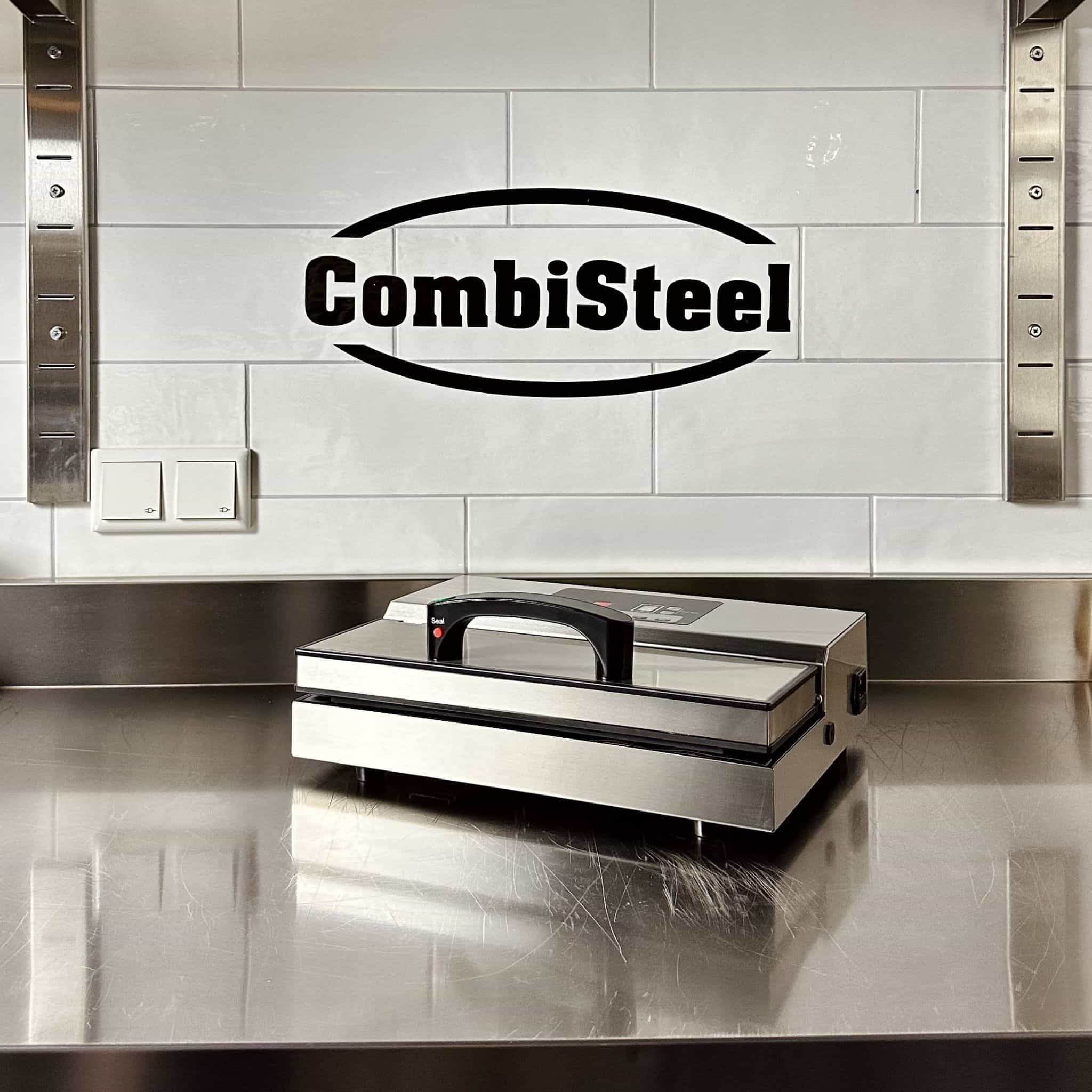
- Adjustable cycle from 0 to 6 seconds to adapt vacuum level to the product and work more cleanly
- Combisteel stainless steel chassis, more stable, durable, and hygienic than a classic plastic model.
- 31 cm bar, versatile enough to pack both standard portions and more generous pieces
Oil or no oil, what are the differences in use?
The short answer is: a lubricated pump aims for performance and regularity in intensive use, while a dry pump or an external machine prioritizes ease of maintenance.
| Machine type | Oil | Main advantage | Point of vigilance |
|---|---|---|---|
| External machine | No | Simple, compact, quick to set up | Less suitable for liquids and very high paces |
| Dry pump chamber machine | No | Chamber comfort without oil maintenance | Compare the pace and vacuum level according to the model |
| Chamber vacuum sealer with oil-lubricated pump | Yes | Very good performance in regular professional use | Level monitoring, draining, and suitable oil |
Verdict:if you want a simple station to operate, go for aexternal machine or a dry pump chamber. If you package often and for long periods, a lubricated pump can become relevant, provided you accept amore rigorous maintenance.
Pro tip:the most common mistake is looking for oil when the machine doesn't require it. Before any purchase or maintenance, check the manual for the exact model, not the general machine category.
What are the risks if maintenance is done incorrectly?
Poor maintenance doesn't just lead to a decrease in comfort. It can also result in: a less precise vacuum, unnecessary temperature rise, less regular cycles, and ultimately, premature pump wear.
On a lubricated machine, common errors are:
- use aoil not recommended,
- waiting too long before draining,
- run the machine with a insufficient level,
- confusing a drop in vacuum with a simple problem of seal, weld, or cleaning.
On an oil-free machine, the right approach is rather to monitor the condition of the seal, the cleanliness of the sealing bar, and the use of the correct bags. If you want to go further on this aspect, also read how to properly maintain your vacuum sealer.
Which machine to choose if you want to avoid the oil constraint?
If your goal is tominimize maintenance, the simplest answer is to choose a model that doesn't require any from the start. This is often the best compromise for demanding home use, small-scale production, or a station where simplicity matters as much as performance.
In practice:
- choose aexternal machine if you mainly package meats, fish, portions, and solid preparations,
- choose adry pump chamber if you also want to process sauces, marinades, or more delicate products,
- upgrade to alubricated chamber only if your pace truly justifies this additional maintenance.
Looking for an easy-to-maintain vacuum sealer?
Browse our selection of professional models to find the right level of performance without unnecessary maintenance.
View professional vacuum sealersFAQ about vacuum sealer oil
Should you put oil in an external vacuum sealer?
No. A external vacuum sealernormally does not require oil in its current use.
Does a chamber machine always use oil?
No. Somechamber machineshave a dry, oil-free pump, others a lubricated pump.
How to know if the oil needs to be changed?
You have to follow themanufacturer's instructions, monitor the level and remain attentive to an unusual drop in performance.
Can any oil be used?
No. You must use a oil compatible with the model's pump, otherwise you risk wear or degraded performance.