
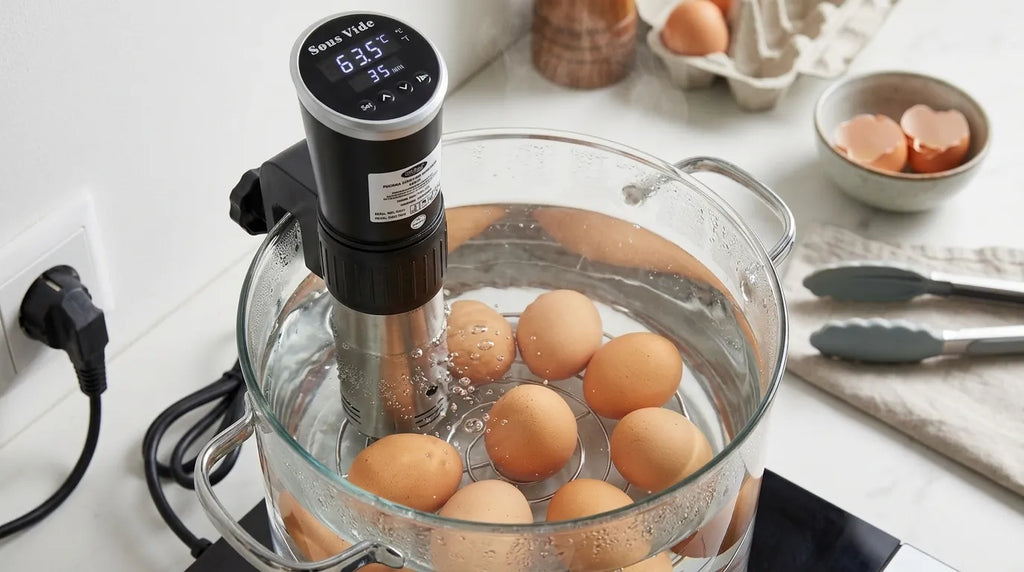
Aperfect egg in the immersion heaterrelies above all on an ultra stable temperature, much more than on a long preparation. With well-kept sous vide cooking, you obtain a delicately set white and a creamy yolk, without overcooked areas or rubbery texture.
In practice, the real subject is not only the cooking time, but thethermal precision, the regularity of the bath and the right equipment if you want to reproduce the same result several times.
What temperature should you aim for to make a perfect egg in the immersion circulator?
For a perfect egg, the useful area is generally around63°C to 64.5°C. It is this range which allows you to obtain a smooth yellow and a still soft white, where a classic saucepan rises too quickly and lacks consistency.
If your objective is a truly regular result, you must above all avoid temperature variations. A bath that oscillates a few tenths can already change the final texture, especially when you prepare several eggs in a row.
- Around 63°C: very supple texture, almost runny.
- Around 64°C: the most versatile balance for a perfect egg.
- Above 65°C: the white becomes significantly firmer, the result becomes less silky.
If you are still discovering this cooking method, you can also read our guideon the exact role of the immersion heater in sous vide cookingto fully understand what the device offers compared to conventional cooking.

- Fine thermal stability to aim for the right perfect egg texture
- Simple to use format for regular home tests
- Rapid temperature rise without complicating installation
How long should you leave eggs in the bath?
For the majority of uses, count45 minutes to 1 hour. The short answer is simple: you have to give the heat time to penetrate to the heart, without trying to “cook harder” to go faster.
In the field, the exact duration depends above all on the temperature chosen, the size of the eggs and the desired serving result. For a brunch, a hot starter or a quick dressing, it is better to aim for a stable routine than an aggressive time.
| Setting | Expected rendering | When to use it |
|---|---|---|
| 63°C – 45 to 60 mins | Very flowing yellow, discreet white | Delicate presentation, creative plates, very soft texture |
| 64°C – 45 to 60 mins | Creamy yellow, more consistent white | The best compromise for most uses |
| 64.5°C – 50 to 60 mins | Stronger texture | When you want an egg that is easier to handle during training |
Verdict:if you want a reliable basis without multiplying tests,64°C for approximately 1 hourremains the most defensible setting for a perfect egg in the immersion circulator.
Field advice:When serving several eggs, preheat the bath well before immersion. The most common mistake is to add the eggs too early, which takes longer to come to temperature and interferes with the regularity of the result.
What material really changes the regularity of the result?
The key question is simple:Do you need a device capable of maintaining a stable temperature without permanent monitoring?If so, a precise immersion heater makes all the difference.
For a few eggs from time to time, a small, precise model is more than enough. On the other hand, as soon as you increase the volume, prepare other sous vide cooking in the same flow, or want to keep a more homogeneous bath, you need more robust equipment.
If you are looking for a broader view of the method, our articleon sous vide cooking with an immersion heatercomplements this approach centered on the perfect egg.
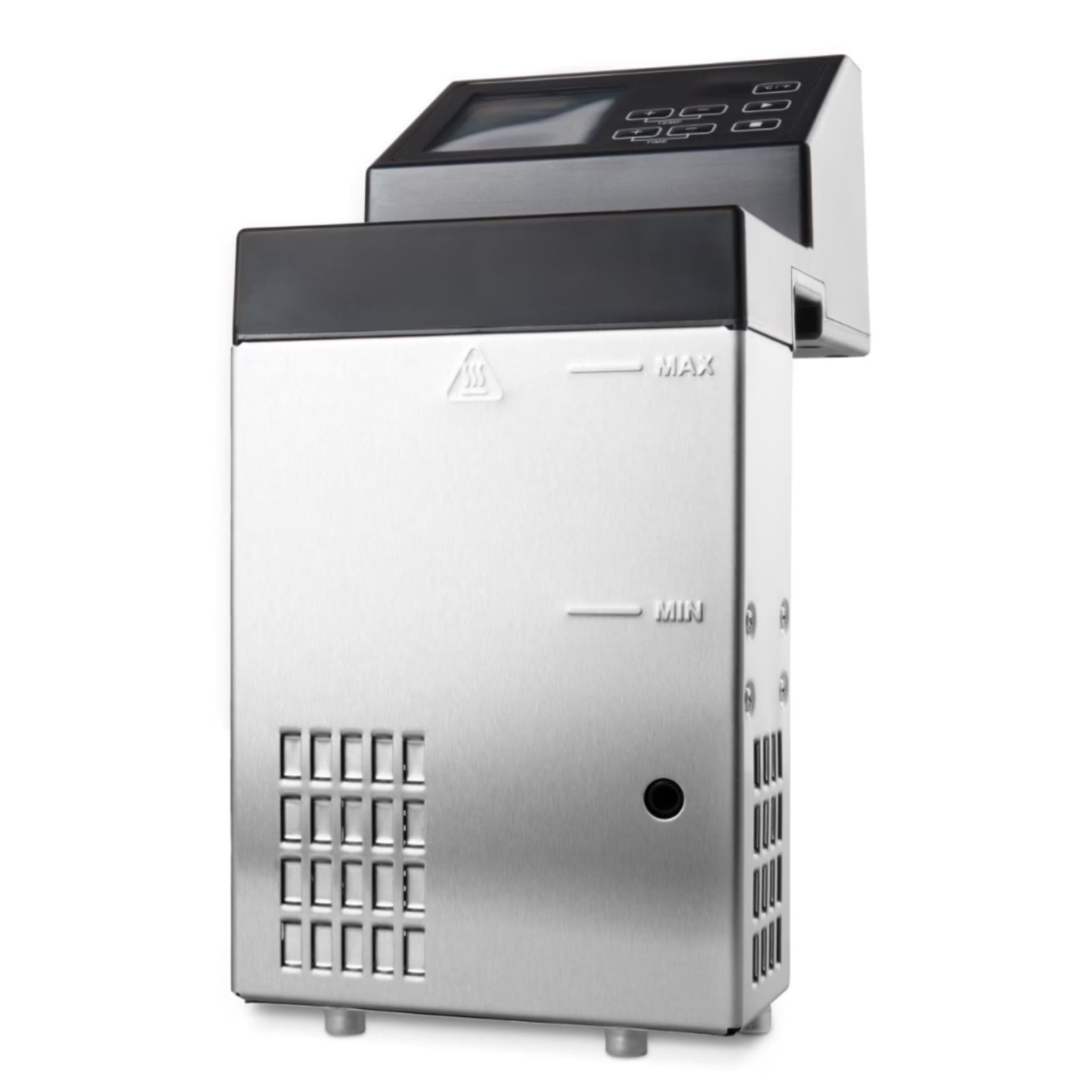
- More power reserve to keep a bath stable in intensive use
- Better suited to repeated cooking and larger volumes
- Excellent choice if the perfect egg fits into a real service workflow
What mistakes most often ruin a perfect sous vide egg?
The short answer: these are not complicated errors, butmethod deviationswhich distort the texture. The perfect egg is less forgiving of approximation than of more thorough cooking.
Here are the errors that come up most often:
- aim for too high a temperature “to be safe”;
- start cooking before complete stabilization of the bath;
- mix very cold eggs and tempered ones in the same series;
- change the time on each trial instead of first setting a reference;
- use a container that is too small, with insufficient water circulation.
In practice, the best logic is to choose a target temperature, keep the same protocol, then adjust with small deviations. It is this discipline that transforms a successful test into a reproducible result.
Do you want to go further in sous vide cooking?
Find our selection of cookers and immersion heatersto gain precision, regularity and comfort of service.
See the sous vide cooking collectionFAQs about the perfect immersion circulator egg
What is the best temperature for a perfect immersion circulator egg?
64°Cis often the best balance point to obtain a creamy yellow and a delicately set white.
How long should you cook a perfect sous vide egg?
Count in general45 minutes to 1 hour, depending on the chosen temperature and the desired texture.
Should you put eggs in a vacuum bag?
No. For a perfect egg, eggs cook most oftenin their shell, directly in the controlled bath.
Is a small immersion heater enough for this cooking?
Yes, as long as it holds the temperature well. For larger series or frequent use, a more powerful model provides more regularity.