

Yes, oneused professional vacuum machinecan be a good buy, but only if the pump, sealing bar and general condition are still consistent with your work pace. As soon as you have any doubts about watertightness, throughput or availability of parts, a well-chosen new model often becomes more profitable than a false good deal.
The real subject is therefore not only the displayed price. You must compare the purchase cost, the risk of breakdown, the quality of the vacuum obtained and the compatibility of the machine with your products, especially if you often package meat, fish, sauces or moist portions.
In what cases does a used machine remain a defensible purchase?
A used professional machine remains interesting if your needs are clear, moderate and technically simple. This is especially true when you already know the type of machine you need and know how to check its condition before purchasing.
In practice, an opportunity can stand if you check the following points:
- you know the history of use or the working environment of the machine,
- the pump still reaches a clean and regular vacuum,
- welding closes the bags without recovery or leaking,
- the seals, cover or bar do not show worrying wear,
- you accept a machine that is less versatile than a recent new model.
If you start from a fairly standard need, a new robust machine can however make the investment more secure. This is particularly true when you are looking for a reliable everyday position without entering into the hazards of a private purchase.
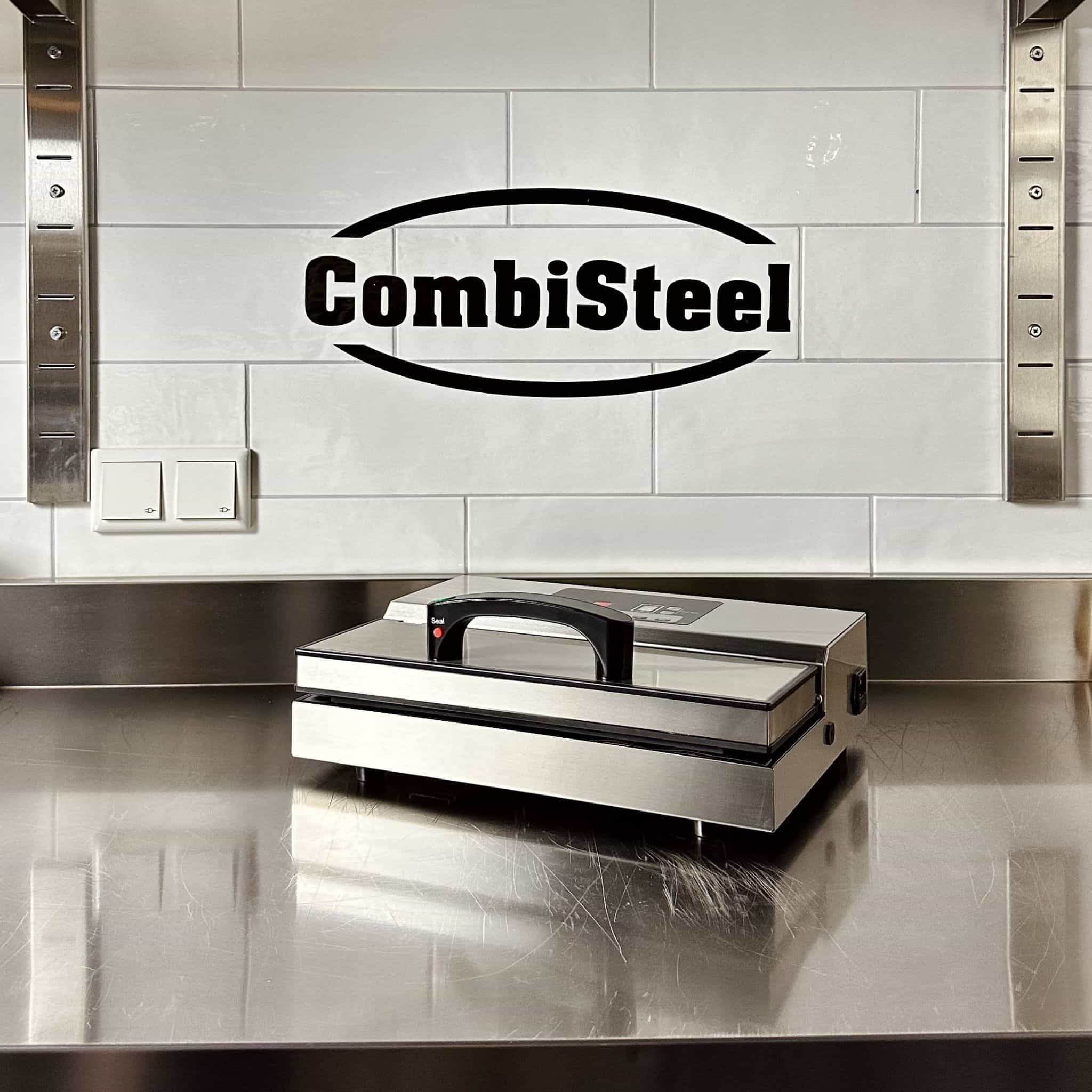
- Adjustable cycle from 0 to 6 seconds to adapt the vacuum level to the product and work cleaner
- Stainless steel chassis Combisteel more stable, more durable and more hygienic than a classic plastic model
- 31 cm bar versatile enough to wrap both common portions and larger pieces
What checks should you make before buying a used professional vacuum machine?
The right question is simple:Does the machine still work properly under real stress?? A seller can announce that it works, but that is not enough to judge a machine intended for regular use.
Before buying, check at least:
- the pump, to see if the vacuum occurs quickly and without abnormal noise,
- the sealing bar, which must close cleanly without poorly welded areas,
- the cover and the seals, especially on bell machines,
- orders, to avoid capricious adjustments or inconsistent cycles,
- parts availability, because a good deal quickly becomes expensive if the repair stalls.
If you're just starting out, it might be helpful to rereadour decryption of the real budget of a professional vacuum machine, because the purchase price is only part of the equation.
Field advice:always ask for a test on a real sachet, ideally with a slightly damp product. A machine that seems fine when empty can reveal its limits as soon as welding becomes more demanding.
Used or new, which option is the most profitable depending on your use?
The answer depends on your pace and the acceptable level of risk. For occasional and well-controlled use, a serious occasion may be enough. For frequent use, profitability often shifts in favor of new, because regularity and peace of mind of service are worth more than initial savings.
| Criteria | Occasion | Nine |
|---|---|---|
| Entrance fee | Lower at the start | Higher but more readable |
| Technical risk | Varies depending on actual wear | Much weaker |
| Vacuum and weld quality | To be checked machine by machine | Stable if the model is well sized |
| Warranty and follow-up | Often limited or absent | More reassuring for regular use |
| Overall cost over 2 to 3 years | Good if the purchase is very healthy | Often better if the machine runs often |
Verdict:if you condition regularly, new is generally the best compromise. The opportunity becomes especially interesting when you know exactly what you are buying and the machine still has a real reserve of reliability.
This reasoning also joins the logic explained inour article on switching to a semi-pro vacuum machine, useful if you are hesitating between a low budget and a reasonable move upmarket.
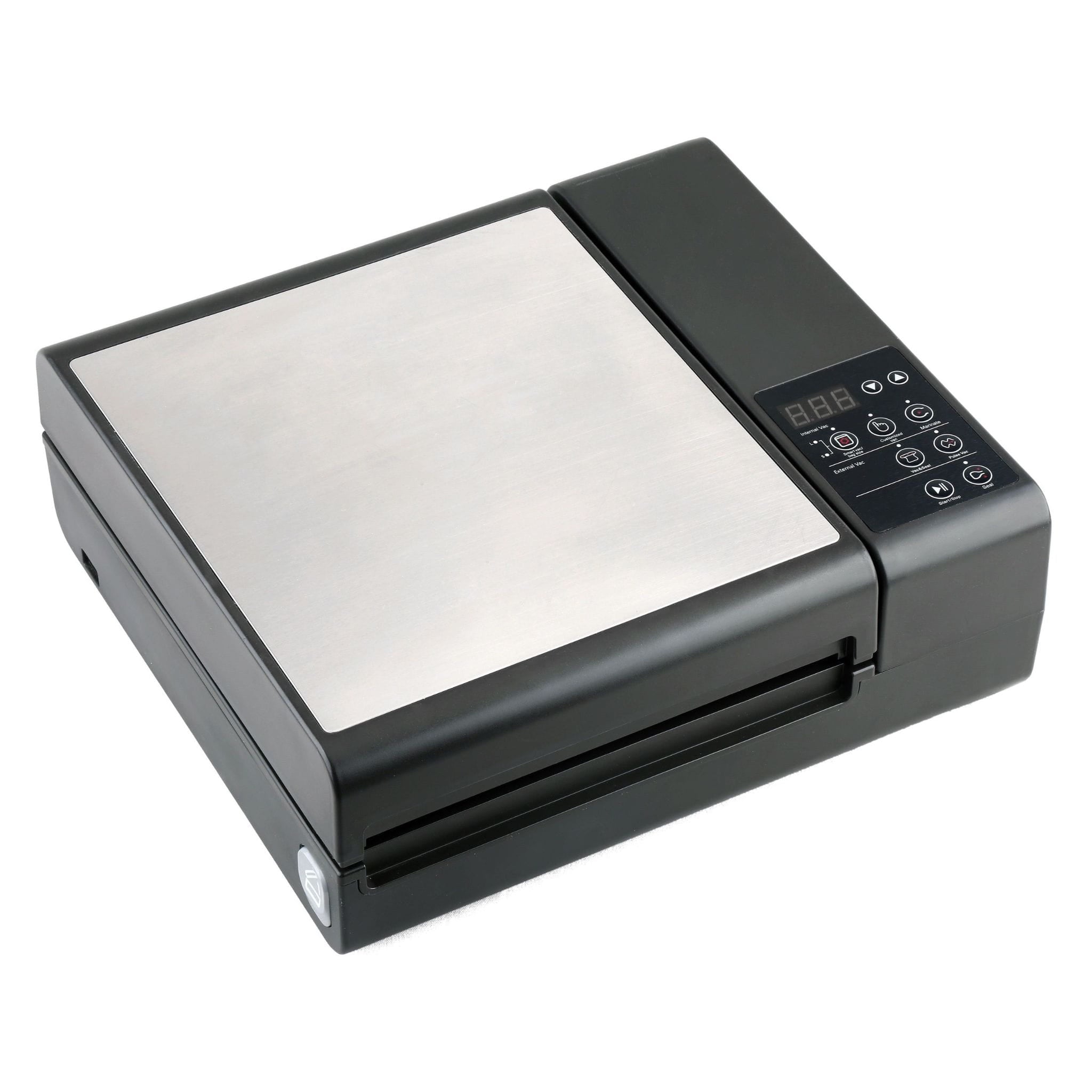
- Bell technology ideal for vacuum-sealing sauces, soups and marinades without causing the liquid to rise in the machine
- Compact size 38 x 34 cm, easier to keep on a work surface than a bulky professional bell
- Compatible with cheaper smooth bags and oil-free dry pump, practical to reduce the cost of daily use
Which machine is best to avoid second-hand?
Certain opportunities should be ruled out almost straight away. This is the case for very worn machines, models without available parts, or devices poorly suited to your products and your pace.
Above all, avoid:
- bell machines having run intensively without proof of maintenance,
- models whose welding seems irregular or already repaired,
- devices that are too old if you have no after-sales service or compatible parts,
- undersized machines for wet, large or frequent bags,
- ads without testing, without precise photos or without a clear answer on the history.
In the field, the most common mistake is buying a cheap machine that tires quickly, then having to replace it a few months later. At that point, the initial economy disappeared.
Do you prefer to secure the purchase from the start?
Browse our selection of professional vacuum machines to compare new models designed for regular use, from the robust external to the compact chamber.
See professional vacuum machinesFAQs on used professional vacuum machines
Is a used professional vacuum machine reliable?
Yes, but only if the pump, welding and seals are still in good condition and the test is conclusive on a real bag.
Should you choose a second-hand bell machine or a new external one?
For liquids and more technical use, the bell retains the advantage. For simple and regular use, a well-chosen new external is often more reassuring.
What is the main risk of buying second-hand?
The main risk is buying a machine whose real wear is not immediately visible, especially on the pump or the quality of the welding.
When is it better to buy new?
It is better to buy new as soon as the machine must run often, process sensitive products or support an activity where a breakdown costs time and turnover.