
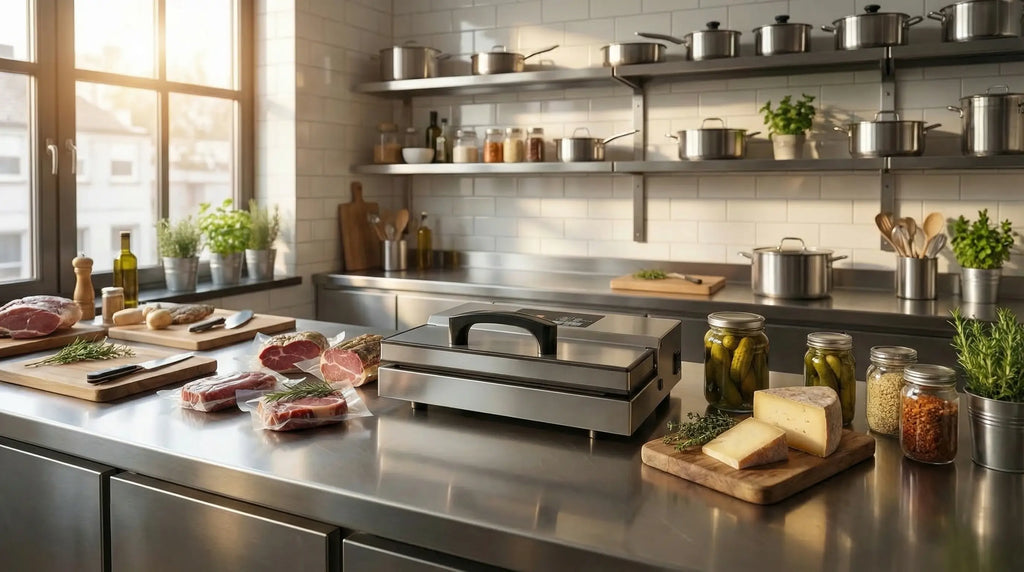
The best professional vacuum sealer isn't necessarily the most expensive. It's the one that keeps up with your pace, handles your products without leaks or wasted time, and remains profitable in the long run.
In practice, a good professional machine is primarily chosen based on three criteria: the type of products to be packaged, the daily volume, and the expected sealing security level. This trio helps avoid overpaying for an overly robust model, or conversely, quickly overloading an undersized machine.
Which professional vacuum sealer to choose according to your activity?
The right answer primarily depends on your actual use. An activity that mainly processes dry items does not have the same needs as a laboratory working with sauces, marinades, or moist preparations.
To choose quickly, start with this simple logic:
- regular use on dry or slightly moist products : a robust external machine is often sufficient;
- need for significant widths or more comfortable series: an XL bar and reinforced seal change daily life;
- frequent work with liquids, fragile products, or sustained pace : the chamber machine becomes more consistent.
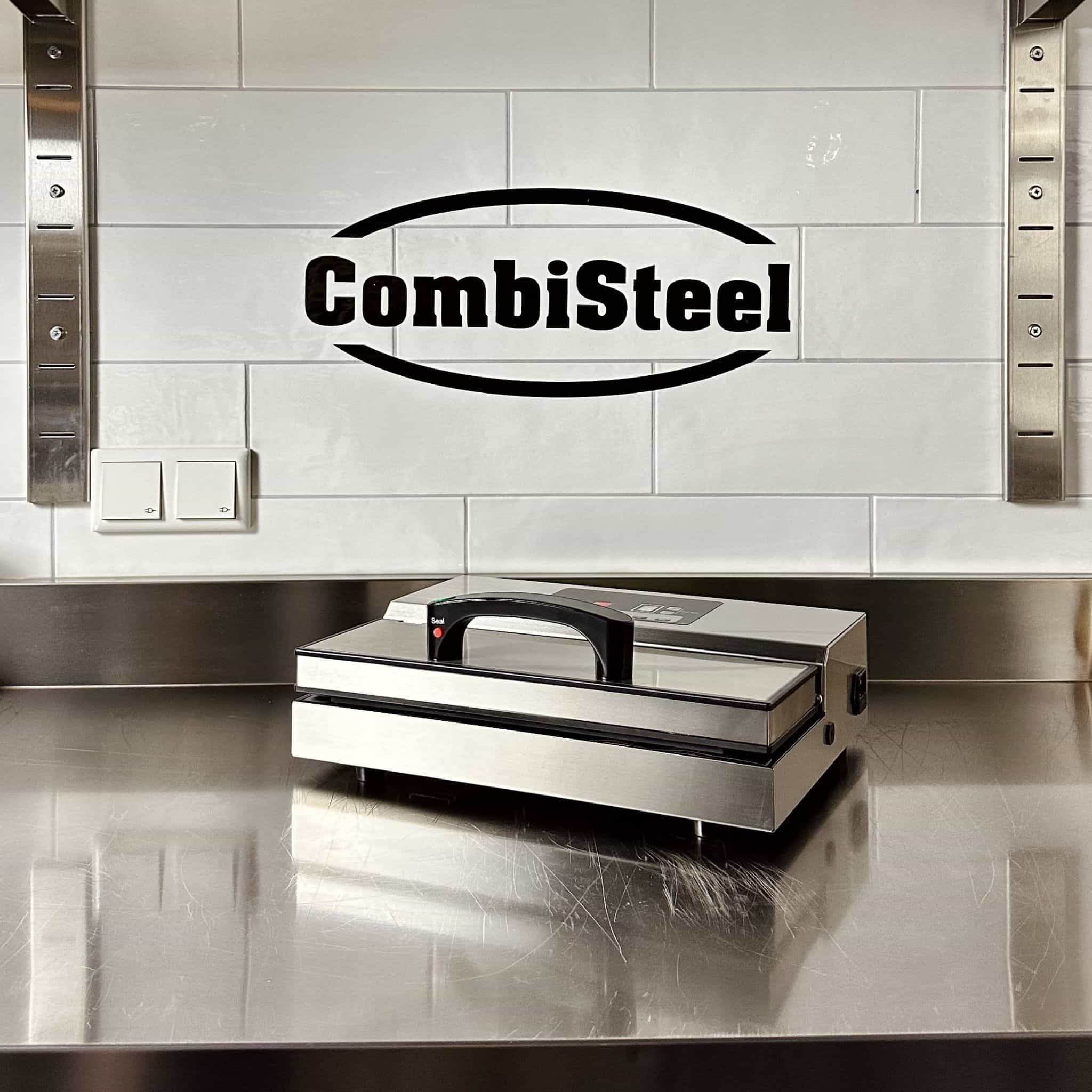
- Adjustable cycle from 0 to 6 seconds to adapt vacuum level to the product and work more cleanly
- Combisteel stainless steel chassis, more stable, durable, and hygienic than a classic plastic model.
- 31 cm bar, versatile enough to pack both standard portions and more generous pieces
What criteria truly elevate a professional machine?
The truly useful criteria are not marketing promises. You should primarily look at what improves vacuum consistency, working speed, and peace of mind with sensitive bags.
1. The sealing quality
A professional machine must seal cleanly, without weakness, especially if you are packing moist products or those stored cold for a long time. An unstable seal quickly costs more than a better-designed machine.
2. The supported cycle rate
A machine that's pleasant for 3 bags a day can become tedious for 30. If you're chaining cycles, the robustness of the chassis, the consistency of the pump, and user comfort matter more than the mere purchase price.
3. The bar width
A wider sealing bar provides breathing room when packaging large items, batches, or two small bags at once. This often translates into a very tangible time saving.
Field tip:if you're hesitating between a very well-equipped external machine and a small chamber machine, first base your decision on the presence of liquids and marinades. This is often the point that makes the real difference in daily use.
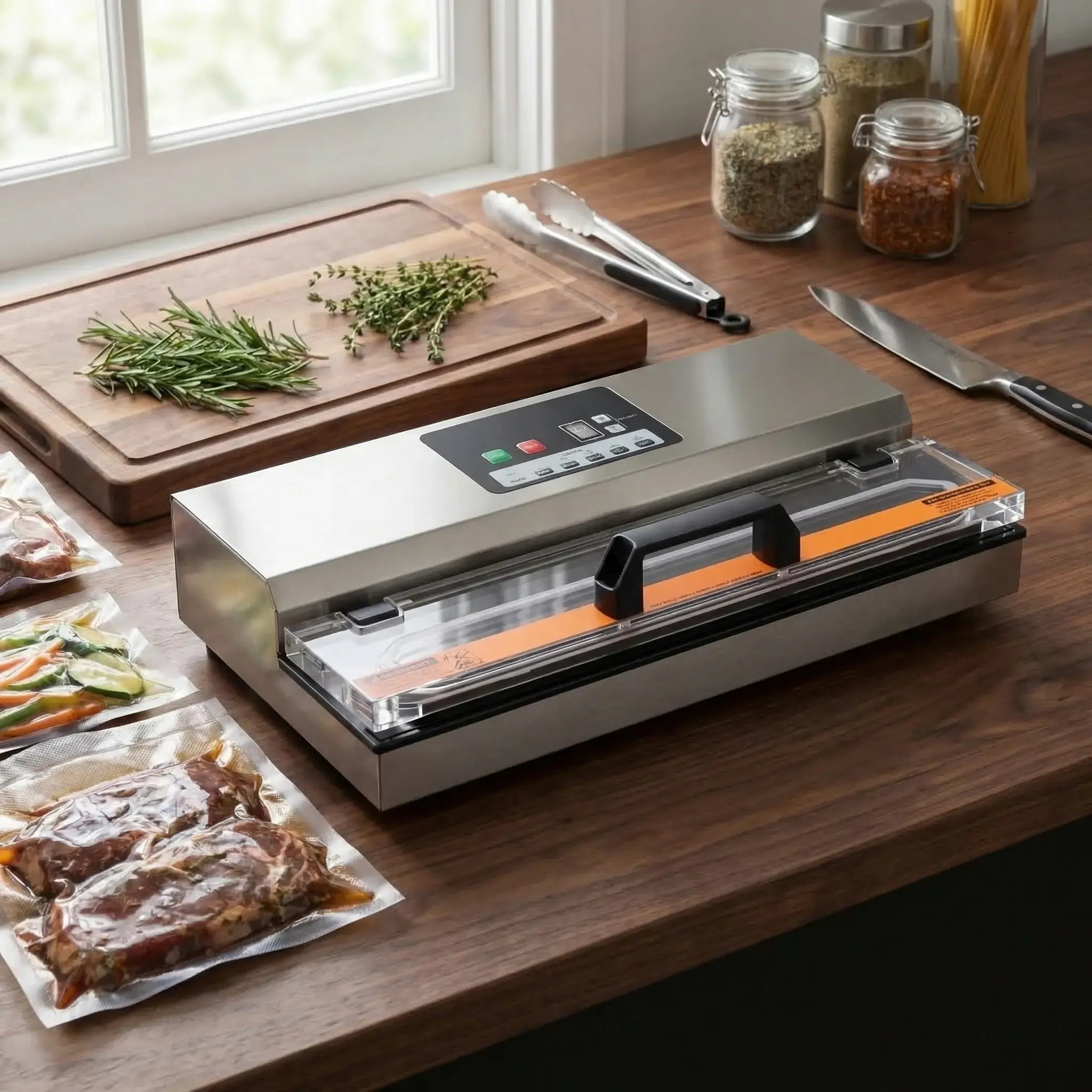
- XL 40.6 cm bar for packaging large items or sealing two small bags in a single pass.
- 5 mm seal, more secure on moist bags, sauces, and preparations sensitive to micro-leaks
- More robust machine than a standard format when you want comfort without switching to a chamber sealer.
Do you need a high-end external machine or a chamber machine?
The question is simple: a high-end external machine remains the best choice if you primarily work with dry products, requiring good speed and versatility. A chamber machine becomes better as soon as liquids, marinades, and smooth bags become prominent in your workflow.
| Need | External pro machine | Chamber machine |
|---|---|---|
| Dry products, meat, cheese, standard portions | Very good choice, quick to implement | Possible, but often more cumbersome than necessary |
| Liquids, sauces, marinades | More delicate, requires precautions | Clearly more suitable |
| Entry-level budget | More accessible for serious professionals | Higher |
| Cost of bags | Embossed bags required | Smooth bags often more economical |
| Footprint | Easier to integrate | Heavier and more fixed |
Verdict:For most workshops, caterers, restaurateurs, and producers who primarily package dry or low-moisture products, a well-built professional external machine is the best compromise. If liquids and delicate preparations are part of daily operations, a chamber machine quickly becomes the best investment.
How to avoid overpaying for your professional vacuum sealer?
The right approach is to pay for a real gain in use, not for a flattering spec sheet. A more expensive machine is only worthwhile if it reduces your errors, saves time, or enables a truly useful application.
Before buying, ask yourself these questions:
- how many bags do you process on a normal day;
- do you pack wet or mainly dry products;
- do you need a large bar width;
- do consumable costs play a big role in your profitability;
- do you work at a fixed station or in a confined space.
If you want to refine your budget, also read our deciphering of the true price of a professional vacuum sealer. And if you hesitate between external and chamber for a more technical use, this buying guide for chamber vacuum sealerswill help you make a clean decision.
Looking for a pro model truly consistent with your pace?
Browse our selection of professional vacuum sealers to compare formats, bar widths, and technologies suited to your use.
View the professional collectionFAQ
What is the best professional vacuum sealer for a small laboratory?
A well-built external stainless steel model, with good sealing and stable pace, is often largely sufficient as long as you primarily work with dry products.
When should you switch to a chamber machine?
As soon as you regularly package liquids, sauces, marinades, or fragile products that complicate work on an external machine.
Is a large sealing bar really useful?
Yes, if you're packaging large pieces, batches, or if you want to save time by sealing two small bags at once.
Can a professional machine be chosen solely based on price?
No, because the truly good choice mainly depends on the pace, the type of products, and the expected level of sealing security.