
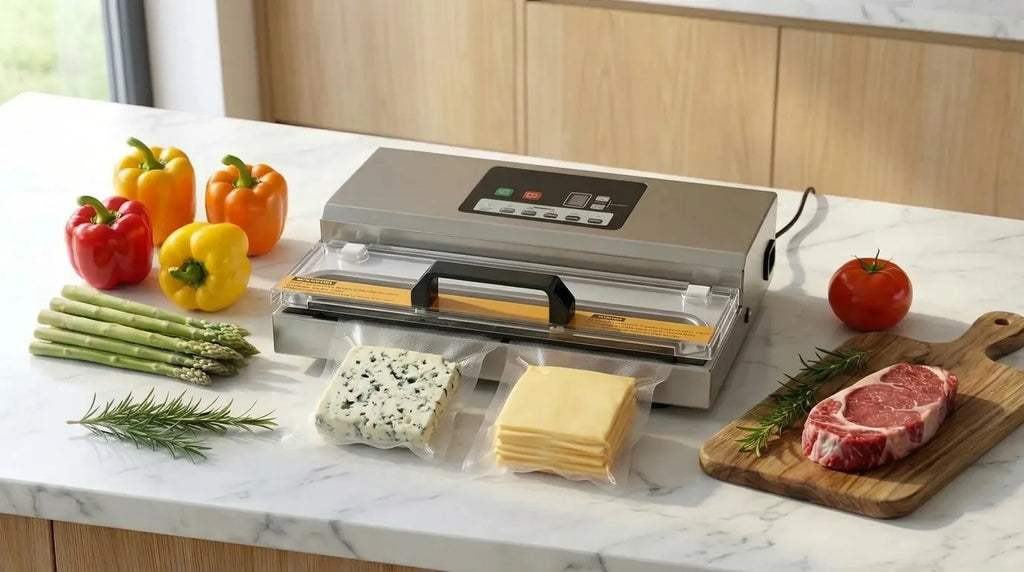
Yes, it is possible to vacuum-pack cheese, but not just any, nor in any way. On hard doughs and certain pressed doughs, sous vide is often very useful to limit drying out, protect the aromas and better portion. On the other hand, with very soft, very creamy or bloomy rind cheeses, more caution is required.
Cheese is a living product. Some continue to evolve, others are still breathing, and some have difficulty supporting the pressure of a bag. The good reflex is therefore not to vacuum-pack everything in principle, but to adapt the method to the type of cheese and the real objective: conservation, portioning, transport or cold storage.

- Very suitable for sliced cheese portions
- Pulse mode useful on softer cheeses
- Good solution for regular domestic use
Which cheeses are good for sous vide?
Sous vide works particularly well on:
- hard pasta: parmesan, matured Comté, mimolette, pecorino;
- uncooked or semi-hard pressed pasta: cantal, gouda, tome, raclette;
- the portions startedthat you want to keep more cleanly in the refrigerator.
In these cases, the main interest is to limit drying out, better contain odors and keep a portion clean for longer.
The right reflex:sous vide is especially relevant for cheeses that are already matured and ready to be consumed, not for cheeses still in the development phase that we want to let breathe.
Which cheeses require more caution?
Not all cheeses react well to vacuum bags. You need to be more careful with:
- soft cheeses with a bloomy rindlike brie or camembert;
- very creamy cheeseswhich can become deformed;
- blue cheeses, whose evolution and structure may be modified;
- very moist cheeses, more sensitive to crushing and condensation.
On these products, vacuum packaging is not necessarily prohibited, but it is not always the best choice in a flexible bag. In some cases, a rigid vacuum box or short storage in more suitable packaging remains more consistent.
How long to keep sous vide cheese?
The exact times depend on the type of cheese, its level of maturation, the actual temperature of the refrigerator and cutting hygiene. Here are some prudent guidelines for cold storage:
| Type of cheese | Classic conservation | Sous vide in the refrigerator |
|---|---|---|
| Hard pasta | 2 to 3 weeks | 4 to 8 weeks, sometimes more depending on the part |
| Semi-hard pasta | 1 to 2 weeks | 2 to 4 weeks |
| Soft/creamy pasta | A few days to 1 week | To be assessed on a case-by-case basis, often less relevant in sachets |
The objective is not to promise unchanged cheese for months in all cases, but to improve conservation cleanliness on the right types of products.
How to vacuum-pack cheese correctly?
The method changes little, but a few precautions make all the difference:
- work with a very cold cheese, especially if it is a little fatty or tender;
- dry the surface if necessarywhen there is humidity;
- leave a clean solder area;
- adapt the suctionon softer cheeses using Pulse mode;
- quickly return to the refrigeratorafter packaging.
On a hard dough, the void can be more clear. On softer cheese, it is better to use gentler suction to avoid deformation.
Which machine to choose for cheese?
For home use, an external suction machine with manual mode is more than sufficient in the majority of cases. It is very suitable for portioning cheese by cutting, cut pieces and moderately sized pieces.
For more sustained use in cheese shops, grocery stores, restaurants or laboratories, a larger format becomes more comfortable, especially if several packages must be produced in succession.
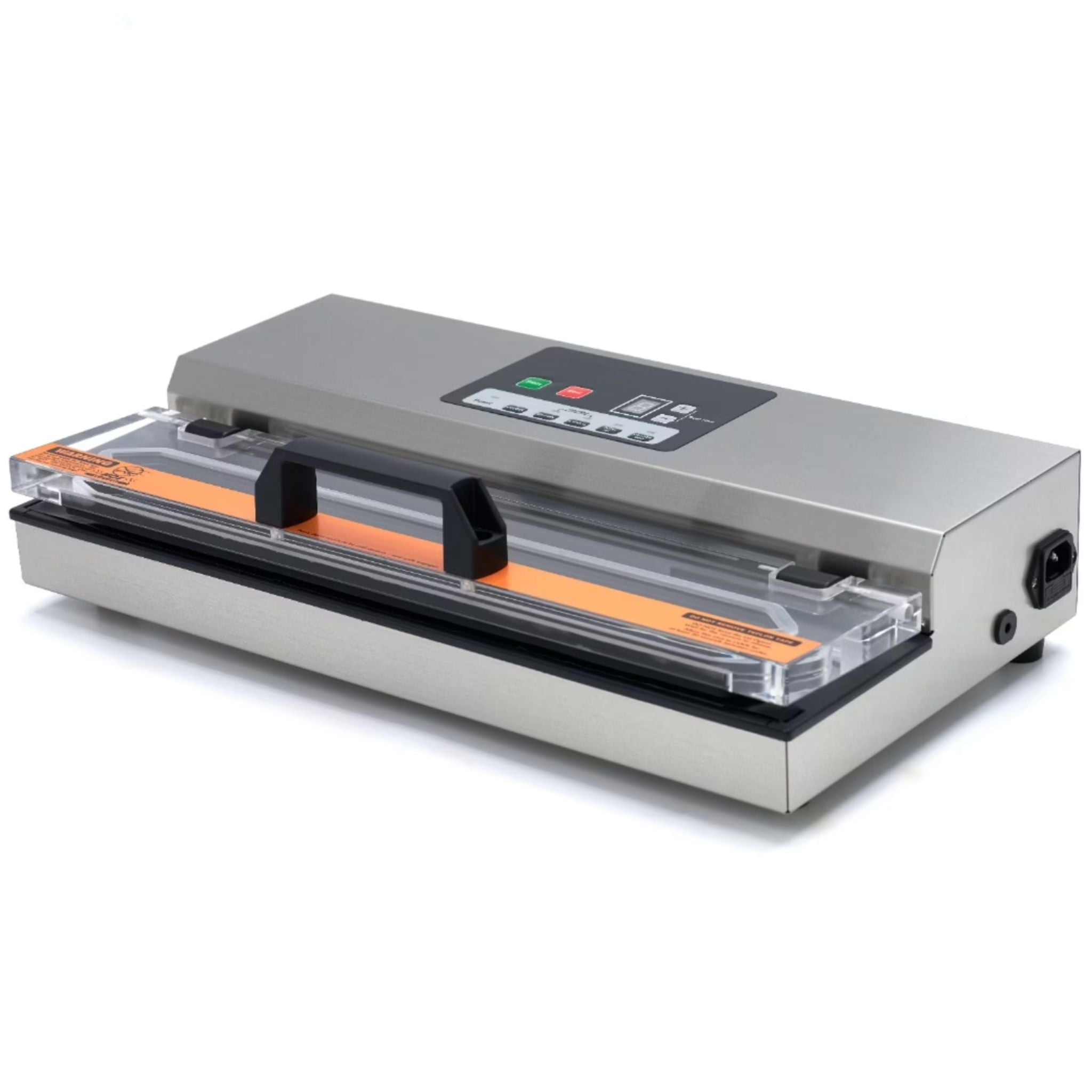
- More comfortable for larger parts and regular series
- Good solution for cheese shop, grocery store and catering
- Adapted to a more sustained pace of packaging
What type of bags to use?
For an external suction machine, compatible bags or rolls must be used. If there is any doubt about the correct format, the most useful course to consult isEmbossed or smooth bags: which bag for your vacuum machine?.
Mistakes to avoid
- vacuum-pack a cheese that is still too hot after preparation;
- crushing soft dough with too strong suction;
- believe that all cheeses are better stored vacuum sealed in bags;
- forget that certain cheeses continue to evolve;
- neglect the coldafter packaging.
Sous vide improves the preservation of many cheeses, but it must remain a protection and portioning tool, not a universal promise.
Conclusion: yes, but especially on cheeses already ready to eat
Vacuum-packing cheese is a very good solution for hard and semi-hard cheeses that have already been ripened, particularly to limit drying out and better preserve started portions. On the other hand, soft cheeses, very creamy cheeses or certain blue-veined cheeses require more discernment.
The right choice therefore depends less on the cheese in general than on its texture, its maturation and the way it should be stored afterwards.
Need a machine to better preserve cheese?
Discover our vacuum machines for homemade portions, cut pieces and cleaner cold storage.
View all machinesSous Vide Cheese FAQ
Can you vacuum-pack Comté or Parmesan cheese?
Yes, they are even among the cheeses that are best suited to sous vide thanks to their firmer texture and their low sensitivity to crushing.
Does Camembert or Brie handle sous vide well?
Not always. These cheeses are more fragile, more humid and more sensitive to deformation. Shorter storage or a rigid container may be preferable.
Does sous vide completely stop the evolution of cheese?
No. Above all, it slows down drying and contact with air, but it does not make all cheeses “set” in the same way.
Should you use Pulse mode on cheese?
Yes, especially on soft or slightly creamy cheeses, to limit pressure and better control the packaging.