
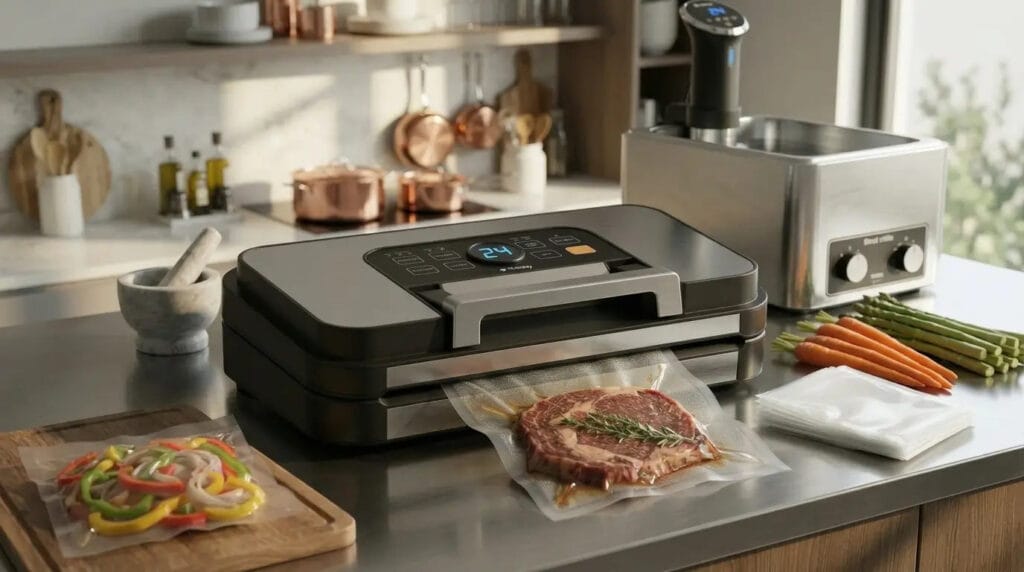
Sous vide batch cooking allows you to cook once, keep it longer and avoid the “tired dish” effect in the middle of the week.Where a dish stored in a box quickly loses its freshness, vacuum packaging slows down oxidation and better preserves the textures, aromas and organization of your portions.
In practice, it’s a simple method: you cook in advance, let it cool properly, vacuum seal it, then store it in a cool place or in the freezer. Result: less waste, less stress in the evening, and ready-to-use meals without sacrificing quality.
Why sous vide really changes batch cooking
Combining batch cooking and vacuum packaging brings three immediate gains:
- Longer shelf life:a ready-made meal lasts much longer than in a traditional can, with less loss of taste and less oxidation.
- Better organized fridge:vacuum bags take up less space than boxes and stack more easily.
- More practical portions:you can prepare individual bags for lunches or family portions for dinners.

Vacuum machine Maxima 31 cm
- Double pump to go quickly when preparing several meals at once
- Pulse function useful for more fragile foods
- Versatile 31 cm format for most batch cooking needs
The right method: cook, cool, seal
The real point of vigilance is not the machine, but the method. For sous vide batch cooking to remain practical and safe, a simple logic must be followed:
- Cookyour recipes normally: simmered dishes, prepared vegetables, meal bases, sauces or marinated portions.
- Cool quickly: never place a hot dish in a vacuum, otherwise you will create steam and weaken the seal.
- Bag and empty: divide the portions into suitable bags, then seal properly.
- Store in the right place: in the refrigerator for the week, or in the freezer if you prepare larger quantities.
Practical advice:If you prepare a lot of dishes with sauce, cool your containers first before bagging. You will gain in welding quality and food safety.
Which dishes work best in sous vide batch cooking?
Sous vide is particularly effective on dishes that hold up well to storage and reheating. The best candidates are generally:
- simmered dishes: bourguignon, curry, chili, blanquette, cooked sauces;
- vegetables already prepared: beans, broccoli, carrots, pre-cooked potatoes;
- marinated raw meats: they take on the aromas better and are ready to cook more quickly later.
Sous-vide is therefore especially interesting when you want to save time without losing consistency. It’s less of a fashion than a real organizational tool.
Want to make your batch cooking really more efficient?
Discover our selection of vacuum machines to prepare, portion and store your meals for longer in good conditions.
Sous vide batch cooking FAQ
Does sous vide batch cooking really allow for longer storage?
Yes. By removing the air, you slow down oxidation and you better keep the freshness of dishes in the refrigerator and freezer.
Can you put a hot dish directly under vacuum?
No. It must first be allowed to cool quickly to avoid steam, poor welding and a risk of less clean storage.
Which dishes are best suited to this method?
Stewed dishes, prepared vegetables and marinated meats are among the best candidates for sous vide batch cooking.
Do you need a very powerful machine to do sous vide batch cooking?
Not necessarily, but a reliable machine with good suction and clean welding makes organization much easier when you’re preparing several meals in advance.


