
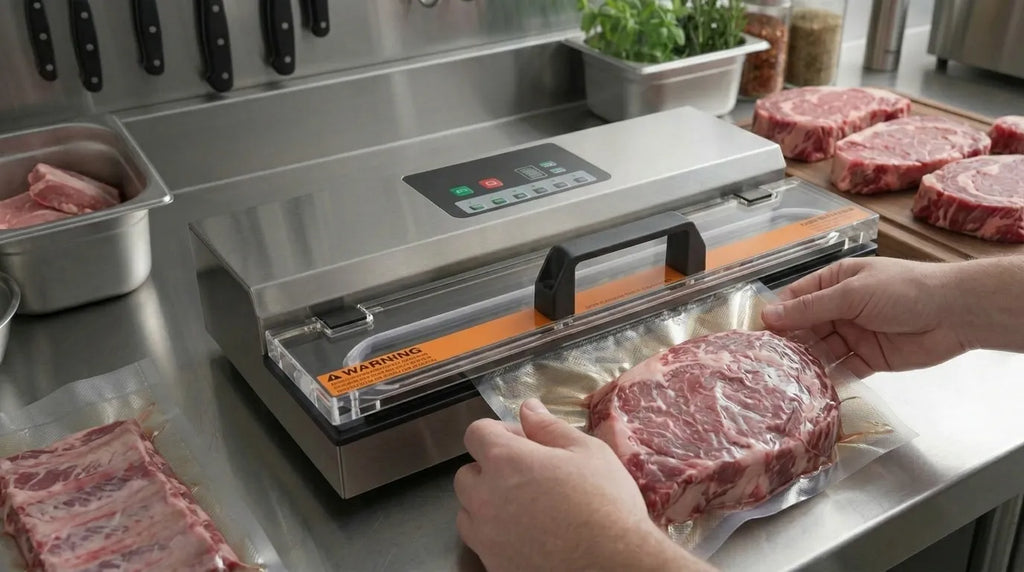
Put somevacuum packed meatis one of the best ways to preserve it better, portion it better and avoid waste. But you still have to do it correctly. Poorly prepared meat, a damp edge of the bag or poorly controlled vacuuming can be enough to fail the seal or alter the result.
The right method, however, is not complicated. Whether for steaks, a roast, poultry or minced meat, the principle remains the same: work cleanly, keep the meat very cold, choose a suitable bag and obtain an impeccable seal.

- Good solution for steaks, fillets, roasts and homemade portions
- Pulse mode useful on the most fragile meats
- Very suitable for the fridge and freezer
For more sustained use in butchery, catering or mass preparation, a larger model can also be offered as a second choice, particularly when the pieces to be packaged are larger and throughput becomes an important criterion.
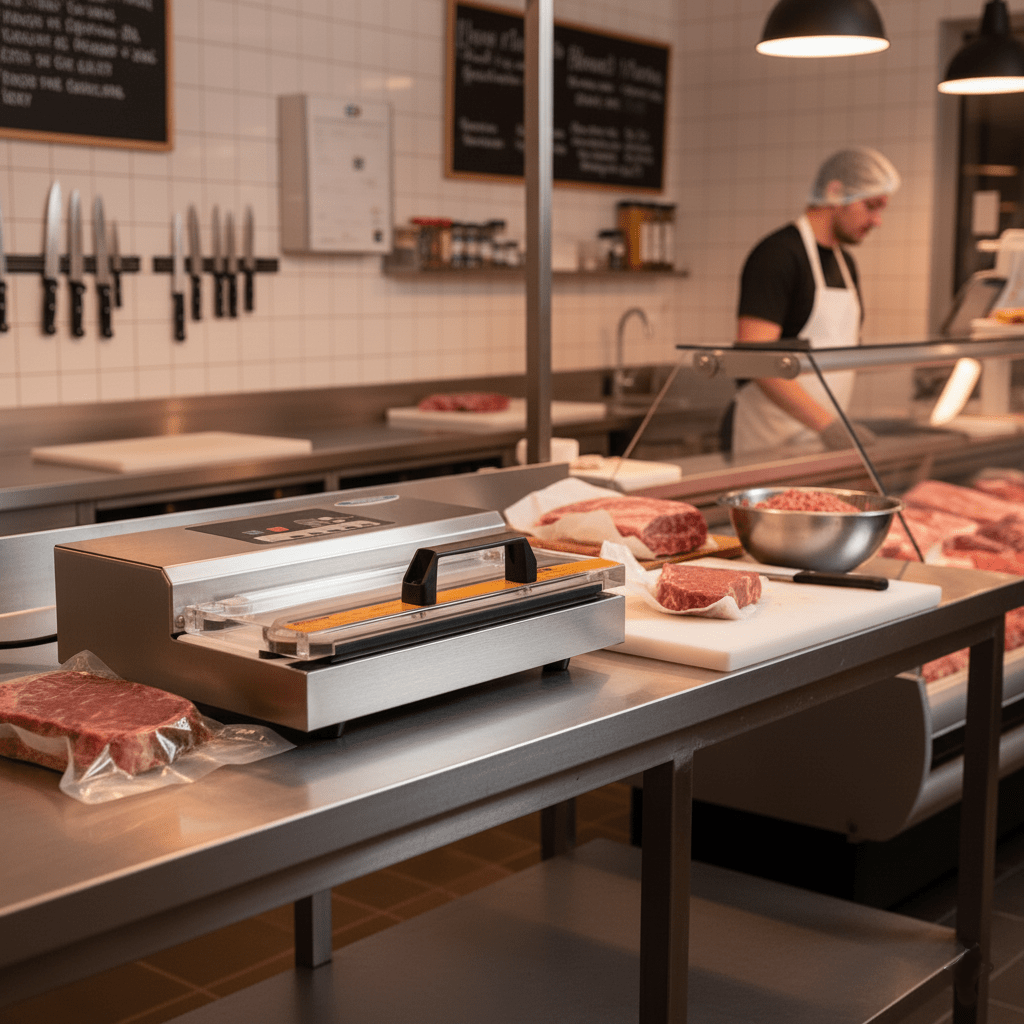
- Wider format for more generous pieces of meat
- More suitable for regular use in butchery or catering
- Good option when flow becomes a real criterion
Why vacuum-pack meat?
The aim of sous vide is not to “transform” the meat, but to better protect it. By significantly reducing contact with air, it helps limit:
- oxidation;
- drying out;
- smells in the refrigerator;
- freezer burnin the freezer.
The most visible result is often meat that keeps cleaner and a much better organized freezer.
Useful point:vacuum-sealed meat may appear darker in the bag. This change in color is not necessarily abnormal: it is often linked to the reduction in contact with oxygen.
Step 1: work with very cold meat
Meat must always be wrappedvery cold. This is important for two reasons:
- it holds better in the bag;
- it limits the risks of condensation or juice rising in the welding zone.
Avoid vacuum-sealing meat that has just remained at room temperature or a preparation that is still lukewarm. Sous vide improves conservation, but never compensates for poor cold management.
Step 2: Portion Before Sealing
The best habit is to portion meatBeforevacuuming. This applies to:
- steaks;
- escalopes;
- chicken breasts;
- pieces for stew;
- minced meat.
For what ? Because this allows you to defrost only the quantity necessary and avoid reopening large bags several times.
Step 3: Keep the soldering area perfectly clean
This is one of the most important points. If juice, fat or humidity rises to the last centimeters of the bag, the seal becomes less reliable.
Before starting the vacuum:
- wipe the edge of the bag if necessary;
- leave enough free space at the top;
- avoid filling the bag to the brim.
Good suction with bad welding is still bad packaging.
Good reflex:Always leave a clean margin at the top of the bag. It is often this detail that makes the difference between successful conservation and a bag that breathes again.
Step 4: adapt the suction to the type of meat
Not all meats react the same way:
- a roast or a firm piece supports a clean vacuum well;
- ground meat, a homemade burger or a fine chicken fillet require more sweetness;
- a very humid room may require a little more attention to raising the juice.
This is where thePulse modebecomes interesting: it allows you to control the suction and stop just before crushing or deforming the meat.
Step 5: seal then immediately refrigerate
Once the meat has been vacuum-sealed, it must turn quickly:
- Atfridgeif it is intended to be consumed quickly;
- Atfreezerif the objective is long storage.
Sous vide improves preservation, but it never replaces the cold chain. This is particularly important for ground meat and poultry.
How long to keep meat sous vide?
The exact times always depend on the initial freshness, handling hygiene and the actual cold temperature. Here are some cautious guidelines:
| Type of meat | Classic in the fridge | Sous vide in the fridge | Sous vide in the freezer |
|---|---|---|---|
| Red meat | 2 to 4 days | 8 to 10 days | 12 to 24 months |
| Poultry | 2 to 3 days | 6 to 9 days | 12 to 24 months |
| Minced meat | 1 day | 4 to 5 days | Up to 12 months |
For the broader subject of machine choice according to parts, volumes and rate of use, the right complementary course isVacuum machine for meat: which one to choose according to your use?.
Common mistakes to avoid
- vacuum-pack meat that is still warm;
- leave fat or juice on the welding area;
- crush fragile meat with too strong a vacuum;
- forget to portionbefore freezing;
- think that sous vide replaces cold.
It is often these simple errors which then degrade conservation or daily practicality.
What if the main goal is freezing?
In this case, the logic remains the same, but the advantage of sous vide becomes even clearer: we better protect the meat from frost and cold burns. For this specific use, the right complementary article isWhich vacuum machine for freezing without cold burn?.
Conclusion: vacuum-sealing meat is above all a question of method
Sous vide is very effective on meat, but the result depends above all on a few good habits: very cold meat, intelligent portioning, clean bag edges, controlled suction and rapid refrigeration.
Done well, it is one of the best levers for better conservation, better organization and less waste.
Want to better preserve your cuts of meat?
Discover our vacuum machines to portion cleanly, protect your purchases and optimize conservation in the fridge and freezer.
View all machinesMeat Vacuum Sealing FAQ
Should meat be vacuum sealed raw or cooked?
Both are possible, but the method must always start with a very cold and correctly handled product.
Why should the weld area be kept dry?
Because fat or juice can harm the seal and cause air to return to the bag.
Is Pulse mode useful on meat?
Yes, especially on fragile meats, homemade burgers, minced meat or certain thin pieces which do not tolerate strong suction.
Is sous vide enough to make meat safe for longer?
No. It improves conservation, but you must always respect the cold chain and hygiene rules.