
Continuous welder
A continuous band sealer closes bags as they pass through, without vacuum packaging them. This collection features two models: a horizontal version for stable products and a vertical version for bags that must remain upright during sealing.
Horizontal or vertical: which sealer should you choose?
| Criterion | Horizontal sealer | Vertical sealer |
|---|---|---|
| Orientation | The bag travels lying flat. | The bag remains upright as it passes through. |
| Use case | Solid, dry or granular products that remain stable on the conveyor. | Doypack and other stand-up pouches; this orientation helps limit contents shifting towards the sealing area. |
| Stated speed | Up to 10 m/min. | Up to 10 m/min. |
| Adjustable temperature | From 0 to 250 °C. | From 0 to 250 °C. |
| Seal | 10 mm band. | 10 mm band. |
| Sizes and options | Stated bag height up to 300 mm; machine only or 150 × 900 mm or 300 × 900 mm conveyor. | Stated bag height up to 300 mm; machine only or 150 × 900 mm or 300 × 900 mm conveyor. |
The horizontal continuous sealer suits bags that can travel lying down without hindering sealing. The vertical sealer should be preferred for keeping stand-up pouches in their natural position. For liquids, fine powders or products likely to reach the opening, test with the actual bag and filling: vertical orientation reduces this risk but does not remove the need for a clean, unobstructed sealing area.
Check material and throughput
The product pages list settings suited to several heat-sealable laminates, including PE, PP, PA-PE, heat-sealable kraft and metallised packaging. The required temperature nevertheless depends on the bag’s exact structure and thickness. Start with a moderate setting, check seal strength after cooling, then adjust temperature and speed.
- Measure the width and height of the filled bag.
- Check that the opening remains flat, dry and free of residue.
- Choose the conveyor according to product weight, stability and footprint.
- Validate the result on a sample before running a batch.
For occasional sealing or small batches, also see our bag sealers and heat sealers.
Why Vacuum Sealer Pro is the smart choice!
| Features | Vacuum Sealer Pro | Other sellers |
|---|---|---|
| European Stock | ✔ | ✘ (Often outside EU) |
| Express Delivery (48/72h) | ✔ | ✘ (Often 15+ days) |
| CE Certified Machines | ✔ | Uncertain |
| 2-Year Warranty Included | ✔ | Complex / Paid |
| Vacuum Sealing Experts | ✔ | Limited (Generalists) |
| Support & Spare Parts | ✔ | ✘ (Non-existent) |
Frequently Asked Questions
Difference between External and Chamber sealers?
External suction (compact machine) removes air from the bag: perfect for solids (meat, cheese). Chamber sealers vacuum the entire chamber: essential for LIQUIDS (soups, sauces) and high volumes.
Which bags should I use?
The golden rule: External vacuum sealers require EMBOSSED (textured) bags to allow airflow. Chamber vacuum sealers (with a tank) use SMOOTH bags (more economical).
What to choose: Pre-cut Bags or Rolls?
Bags are ready to use: choose them for speed. Rolls are for economy and custom sizing: you cut exactly the length you need. Ideal for very long items (salmon, fillets) or to avoid plastic waste.
Do you sell spare parts?
Yes. Unlike disposable supermarket appliances, our machines are built to last. We offer wear consumables (gaskets, Teflon strips) and can supply technical parts to ensure the maintenance of your equipment.
What is the warranty?
All our equipment is covered by a 2-year manufacturer's warranty. In case of failure, our technical support team will assist you with repair or exchange.
What Foods Can Be Vacuum Sealed?
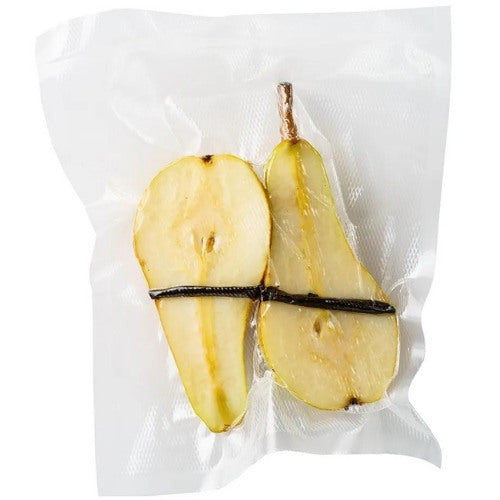
Fruits
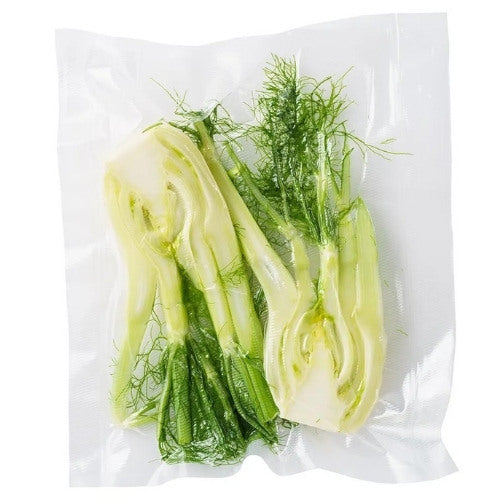
Vegetables
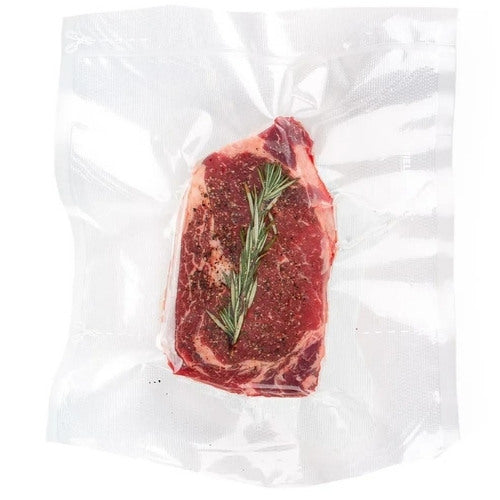
Meats
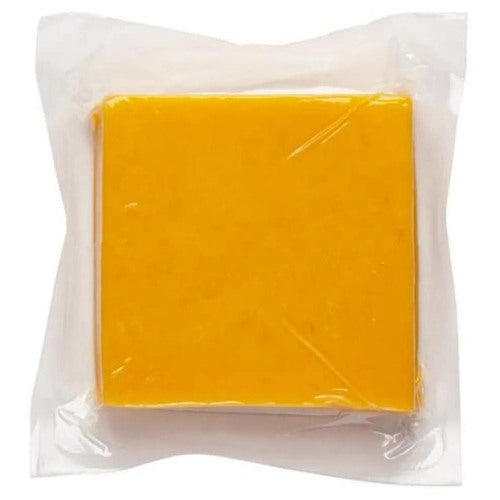
Cheeses
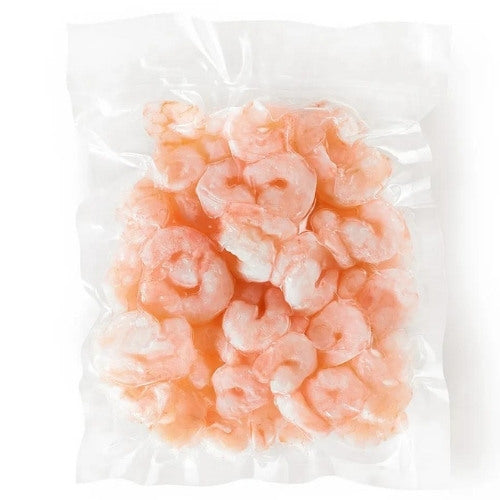
Fish/Seafood
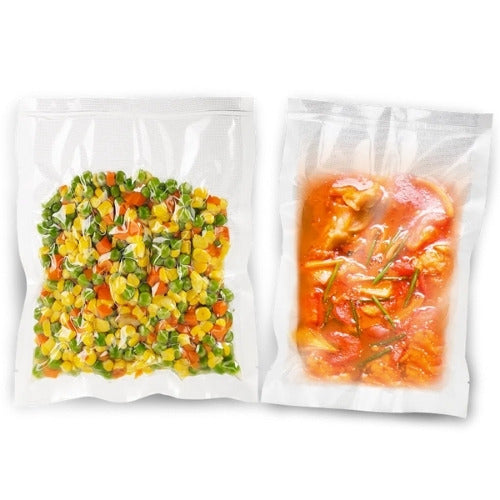
Prepared dishes/Sauces
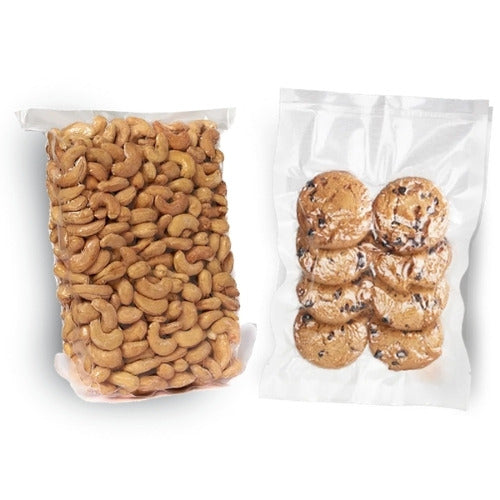
Snacks and crackers