
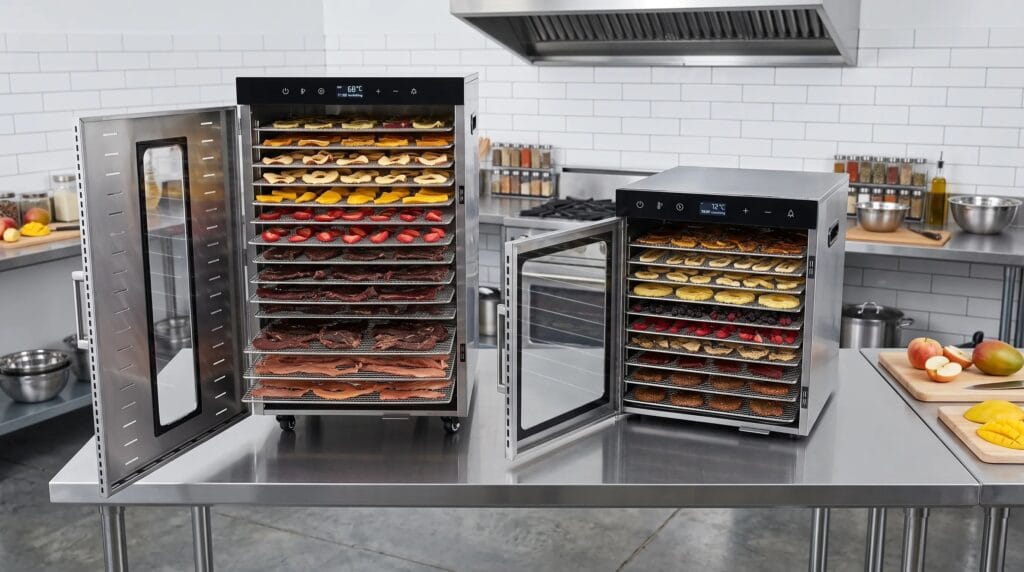
The best vegetables to put in the dehydrator are those that tolerate fine cutting and gentle drying: tomatoes, peppers, zucchini, mushrooms, carrots, onions, garlic, celery, eggplant and aromatic herbs. To succeed, we must above all adapt cutting, possible blanching, temperature and drying time to each vegetable.
What vegetables should you put in the dehydrator?
You can dehydrate many vegetables, but not all of them behave the same. Vegetables rich in water require regular cutting; dense vegetables often benefit from being blanched or precooked briefly.
| Vegetable | Recommended preparation | Most useful result | Ideal use |
|---|---|---|---|
| Tomato | Thin slices or quarters, optional seeding | Soft to dry texture | Sauces, pastas, salads, flavored oil |
| Pepper | Lamellae without seeds or white membranes | Dry strips or powder | Soups, stews, homemade paprika |
| Zucchini | Thin washers or half washers | Light chips or pieces to rehydrate | Snacks, soups, stir-fries |
| Mushroom | Regular slats, without excess water | Dry texture and concentrated fragrance | Risotto, sauce, broth, omelette |
| Carrot | Thin slices, julienne or blanched dice | Dry pieces easy to rehydrate | Soups, broths, stews |
| Onion/garlic | Thin, well-spaced slats | Glitter or powder | Seasoning, marinades, dry mixes |
Verdict: To start, choose tomatoes, peppers, zucchini or mushrooms. They dry well, give a visible result and are easily reused in the kitchen.

Stainless steel dehydrator 10 trays – 800 W, 30 to 90°C
- 10 stainless steel trays to dry several preparations in a single session
- 800 W power for regular drying of fruits, vegetables, herbs or homemade preparations
- Adjustable temperature from 30 to 90°C to adapt drying to fragile foods as well as more intensive needs
How to prepare vegetables before drying?
Preparation is as important as temperature. A well-washed, well-cut and well-spaced vegetable dries faster, more evenly and keeps better.
- Wash and dry thoroughly vegetables to avoid adding water unnecessarily.
- Remove the hard parts : peduncles, seeds, white membranes, ends, damaged areas.
- Cut thin and even : 3 to 8 mm depending on the vegetable and intended use.
- Pat dry very juicy vegetables, especially tomatoes, zucchini and peppers.
- Arrange in a single layer, without overlap, to allow air to circulate.
For dense vegetables like carrots, green beans or broccoli, short blanching can improve texture and facilitate rehydration. For very watery vegetables, the priority remains fine cutting and good spacing.
At what temperature should vegetables be dried in a dehydrator?
Most vegetables dry well between 50 and 60°C. Going too low significantly lengthens the cycle; going too high can cook or harden the exterior before the core is dry.
| Vegetable family | Recommended temperature | Indicative time | Checkpoint |
|---|---|---|---|
| Very watery vegetables: tomato, zucchini, pepper | 50-55°C | 8 a.m. to 4 p.m. | No more juice, dry flesh in the center |
| Dense vegetables: carrot, beetroot, parsnip | 55-60°C | 8 to 2 p.m. | Dry pieces, easy to break or rehydrate |
| Mushrooms | 50-55°C | 6 to 12 p.m. | Dry strips, concentrated fragrance |
| Onion, garlic, shallot | 50-55°C | 6 to 12 p.m. | Brittle texture for glitter or powder |
| Aromatic herbs | 35-45°C | 2 to 6 hours | Leaves dry but still fragrant |
Verdict: 55°C is the right starting setting for most vegetables. Then adjust according to thickness, humidity and the desired result.
For precise settings per food, keep our guide to dehydrator drying time on hand.
Should you blanch vegetables before dehydrating them?
Blanching is not mandatory for all vegetables. It is especially useful for dense or fibrous vegetables that you then want to rehydrate in a soup, broth or simmered dish.
- To be bleached preferably: thick carrots, green beans, broccoli, cauliflower, peas.
- Often unnecessary to launder: tomatoes, peppers, mushrooms, onions, garlic, thin zucchini.
- To be decided according to use: eggplant, beetroot, celery, leek.
Practical advice: If you want to make a dry powder or seasoning, avoid adding too much water with unnecessary blanching. If you want to rehydrate the vegetable in a soup, blanching can give a nicer texture.
How to use dried vegetables?
Dried vegetables are used to concentrate the flavor and save space. They can be used dry, rehydrated or mixed into powder depending on the recipe.
The most practical uses are:
- Soups and broths: carrots, leeks, mushrooms, celery, onions.
- Stewed dishes: tomatoes, peppers, eggplants, mushrooms.
- Homemade powders: pepper, tomato, garlic, onion, mushroom.
- Savory snacks: thin zucchini, vegetable chips, seasoned strips.
- Dry mixes: bases for rice, semolina, sauces, marinades or hiking.
For a concrete example of a very simple vegetable to succeed, consult our recipe for pepper in dehydrator.
How to store dehydrated vegetables?
Dehydrated vegetables must be cooled, dry and stored away from humidity. If condensation appears in the container, drying is not complete.
Use a clean jar, airtight bag or vacuum packaging if you are preparing large volumes. Keep vegetables in a dry, dark and cool cupboard. The first few days, check that the pieces remain stable and do not soften.
Simple benchmark: for safe storage, vegetables intended to be kept for a long time must be drier than those consumed quickly as a snack.
Mistakes to avoid with vegetables in the dehydrator
Most failures come from uneven drying. A dry exterior is not enough: the heart must also be stabilized, especially for thick or very watery vegetables.
- Cut too thick: the center remains humid and preservation becomes less reliable.
- Fill the trays to the brim: the air circulates poorly and drying becomes uneven.
- Store while still warm: condensation can soften vegetables.
- Add too much oil: this slows down drying and complicates storage.
- Mix very different sizes: some pieces are dry while others remain moist.

Professional food dehydrator 24 trays
- 24 trays to process large volumes without multiplying cycles
- Professional format suitable for regular production of fruits, vegetables, herbs or dried preparations
- Large useful capacity to organize a more productive and constant dehydration station
Want to dry vegetables, fruits and homemade preparations more regularly?
Choose a dehydrator adapted to your volumes to space out foods, keep a stable temperature and succeed in your drying cycles.
Vegetable Dehydrator FAQ
Which vegetables are easiest to dehydrate?
Tomatoes, peppers, zucchini, mushrooms, onions and garlic are good choices to start with, as they cut easily and provide a useful result in cooking.
Should you cook vegetables before putting them in the dehydrator?
Not always. Dense vegetables can be blanched briefly, but tomatoes, peppers, mushrooms, onions and thin zucchini often dry raw.
At what temperature should vegetables be dried?
Most vegetables dry well between 50 and 60°C. Aromatic herbs tend to require a lower temperature, around 35 to 45°C.
Why do my dehydrated vegetables get soggy in the jar?
They still contain too much moisture or have been stored too hot. Return them to the dehydrator, let cool, then store dry again.