✓Vacuum sealing for demanding professionals-Free Express Delivery from €100 excl. VAT

| Features | Vacuum Sealer Pro | Other sellers |
|---|---|---|
| Stock in France and Europe | ✔ | Sometimes outside the EU |
| Fast delivery (48/72h) | ✔ | Varying lead times |
| CE-compliant machines | ✔ | Must be checked for each machine |
| 2-year manufacturer’s parts warranty | ✔ | Often 1 year |
| Specialist in professional vacuum packaging equipment | ✔ | Often generalists |
An oven may be suitable for occasional trials, but it is primarily designed for cooking. Depending on the model, its minimum temperature may be too high and its airflow less suitable for long, consistent drying cycles. A professional food dehydrator is designed specifically for this purpose, with an adjustable temperature of 30–90 °C, continuous airflow, multiple trays and an integrated timer. It can process more food at once, makes it easier to achieve consistent results from one batch to the next and keeps the oven available for other preparations.
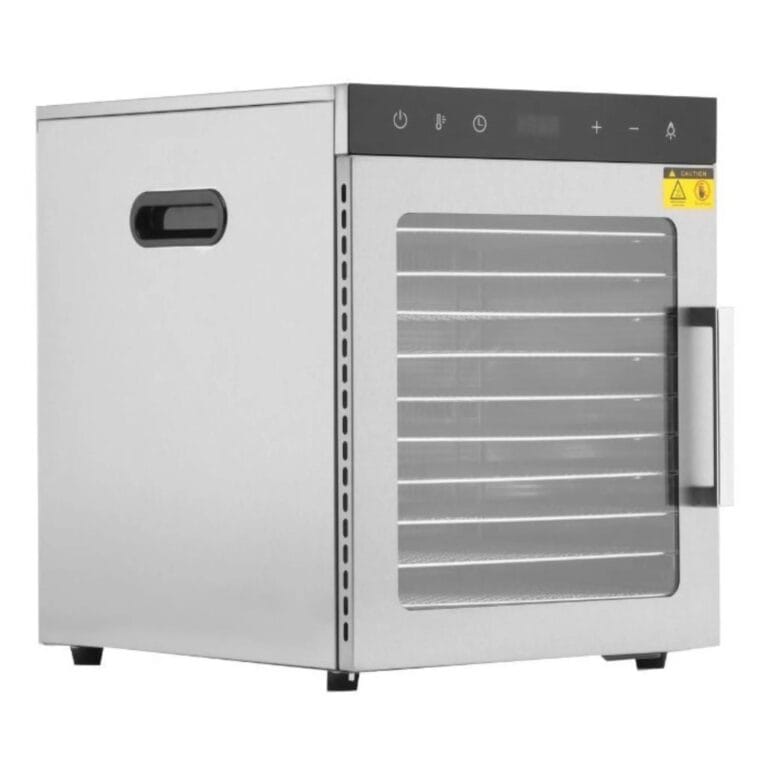
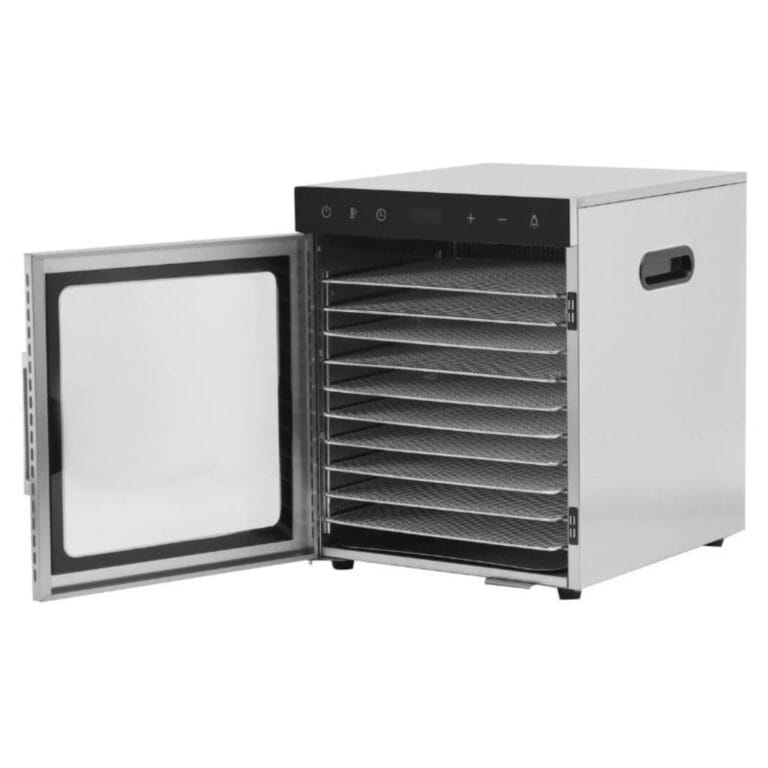
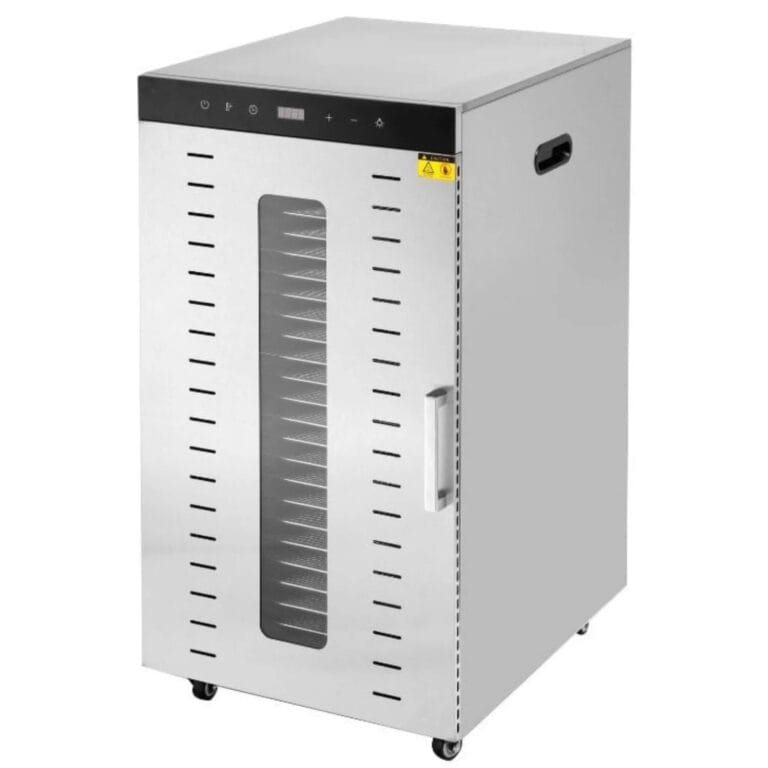
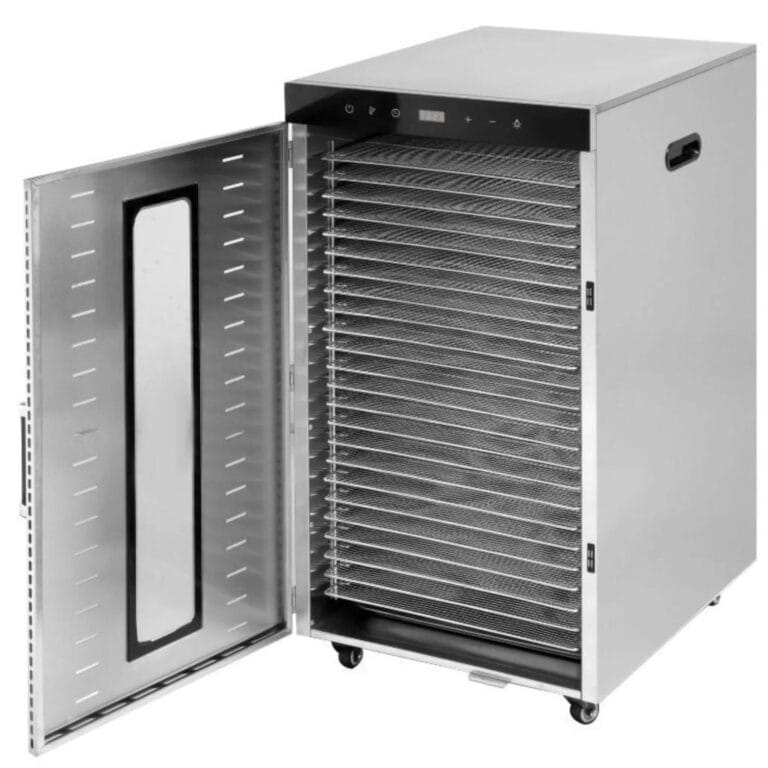
Both of our food dehydrators feature a stainless steel housing and food-contact racks made from stainless steel 304. This design is suitable for regular use, easy to clean and provides a robust surface for fruit, vegetables, herbs, marinated preparations and other foods. The removable racks and drip tray also make cleaning between batches easier.
The 10-tray model is recommended for small to medium batches or where space is limited. With dimensions of 350 × 400 × 430 mm, a power rating of 800 W and ten levels, it offers a good balance between capacity and footprint. The 24-tray model is designed for larger-scale production. Its 400 × 380 mm trays, 2,000 W power rating, three fans and timer programmable for up to 24 hours allow more products to be processed with fewer cycles and less handling. Its four castors also make it easier to move around a professional workspace.
The settings depend on the food, its thickness and water content, the quantity loaded and the desired texture. Herbs and delicate preparations generally require a lower temperature, while fruit, vegetables and foods with a higher moisture content often need more time. Use the instruction manual or a dehydration chart as a starting point, then check the results during the first cycle before applying the same settings to subsequent batches.
Cut the food to an even thickness and arrange it in a single layer without overlapping. Leave enough space between the pieces for air to circulate and avoid overloading the racks. To make the cycle easier to monitor, group foods of a similar size and water content whenever possible. Preparing consistently sized pieces is just as important as the machine settings for achieving consistent results.
Vacuum Sealer Pro is a brand of the PIMA OÜ group, specializing in machines and consumables for professional vacuum packaging. It operates throughout the European Union, with its range available in 12 languages.