
Vacuum bags
The right vacuum bag depends first on your machine’s technology, then on the required size and intended use. This collection includes embossed bags, smooth bags, kraft bags, rolls and a cutting accessory. These families are not interchangeable and do not all offer the same cooking or reheating options.
Which bag should you choose for your machine?
| Family | Suitable machine | Main use | Cooking and reheating |
|---|---|---|---|
| Embossed | External-suction machine; also usable with certain chamber machines | Portions, cuts of meat, fish, vegetables; pre-cut bags or adjustable rolls | Possible only when the product page states a compatible temperature range. Observe the stated maximum temperature. |
| Smooth | Chamber machine | Professional packaging, series of bags and large formats | Some products are intended for low-temperature cooking; others only for chilled and frozen storage. Check the page for your chosen size. |
| Kraft | Chamber machine | Presentation, chilled storage and freezing | For these kraft bags, the product page confirms chilled and frozen storage only; do not use them for cooking or in a microwave unless stated otherwise. |
| Roll holder with cutter | Accessory for compatible rolls | Holds the roll and cuts it straight to the desired length | Not applicable: this accessory is not a food-contact consumable. |
Size, width and use: practical checks
- Measure the seal bar: the bag or roll must remain within the width accepted by the machine.
- Allow a clean margin above the product so the opening can be correctly positioned on the bar for a consistent seal.
- Select the size for the product: small portion, bulky item, professional series or a custom length cut from a roll.
- Check each product page before freezing, sous-vide cooking or reheating in a bain-marie. Thermal compatibility stated for one bag does not apply to the whole collection.
Cooking, bain-marie and microwave: do not generalise
The term “vacuum” describes the packaging method, not automatic suitability for heating. For low-temperature cooking or reheating, use only a bag whose product page confirms that use and remain within its validated range. Use a bag in a microwave only if its page confirms this. The kraft bag and several large smooth bags are presented for chilled or frozen storage, with no cooking indication.
Finally, vacuum packaging replaces neither hygiene nor observance of the cold chain nor procedures suited to the product. To choose the vacuum technology first, see our vacuum sealers; to explore chamber packaging in depth, see our chamber vacuum machines.
Why Vacuum Sealer Pro is the smart choice!
| Features | Vacuum Sealer Pro | Other sellers |
|---|---|---|
| European Stock | ✔ | ✘ (Often outside EU) |
| Express Delivery (48/72h) | ✔ | ✘ (Often 15+ days) |
| CE Certified Machines | ✔ | Uncertain |
| 2-Year Warranty Included | ✔ | Complex / Paid |
| Vacuum Sealing Experts | ✔ | Limited (Generalists) |
| Support & Spare Parts | ✔ | ✘ (Non-existent) |
Frequently asked questions about vacuum bags
What is the difference between an embossed vacuum bag and a smooth vacuum bag?
Embossed bags have microchannels that make it easier to extract air with an external suction vacuum sealer. They are therefore suitable for domestic and semi-professional machines of this type. Smooth bags are mainly designed for chamber vacuum sealers. Before ordering, identify the type of machine you use: this is the primary compatibility criterion.
How do you use a vacuum roll?
Unroll the required length, allowing enough extra material to insert the food and seal the bag. Cut the roll straight with scissors or, more conveniently, with a roll dispenser fitted with a cutter. Seal one end first to form the bottom of the bag, then add the food while keeping the opening clean and dry. Next, place the open end in the machine: it extracts the air before creating the second seal. A roll therefore allows you to make a bag suited to the length of each food item and reduce unnecessary offcuts.
How do you choose the right vacuum bag size?
The width of the bag must be less than the usable length of the sealing bar. You should also allow enough length to insert the food without soiling or stretching the opening. Small sizes are suitable for individual portions. Larger sizes are better suited to bulky or elongated items. For products that vary greatly in size, rolls offer greater flexibility.
Can food be frozen or cooked in all vacuum bags?
It depends on the specific product. PA/PE food bags indicated for these uses may be suitable for freezing and, depending on their maximum temperature, for sous-vide cooking. This limit varies between embossed bags, rolls and smooth bags, so always check the temperature stated on the selected product page. The kraft bags in our range are intended for chilled storage and freezing; they are not presented as a universal cooking solution.
How can you prevent air leaks after vacuum sealing?
Keep the sealing area clean, dry and free from creases. Use a bag that is compatible with your machine and leave enough space between the food and the opening. Sharp edges, bones and cutting edges should be protected to prevent them from puncturing the bag. After sealing, inspect the seam visually so that you can immediately spot a crease or an incompletely sealed area.
What Foods Can Be Vacuum Sealed?
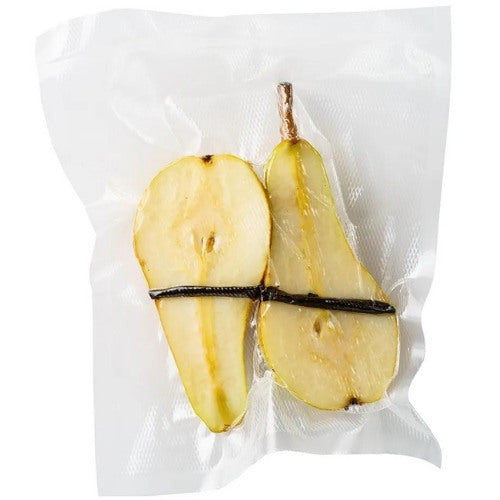
Fruits
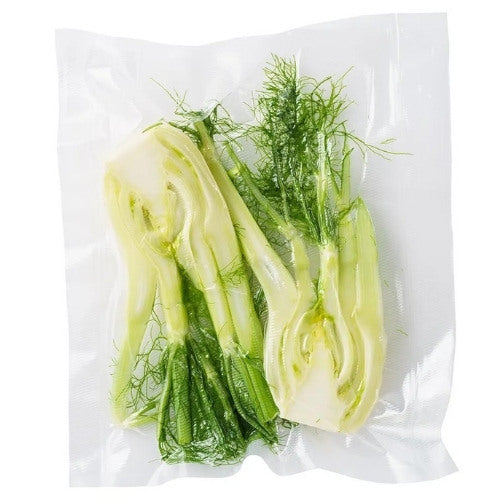
Vegetables
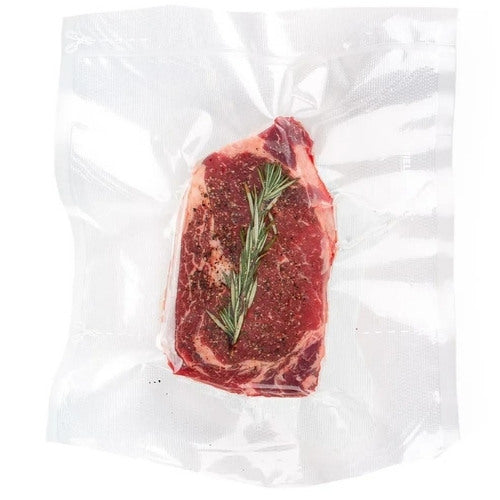
Meats
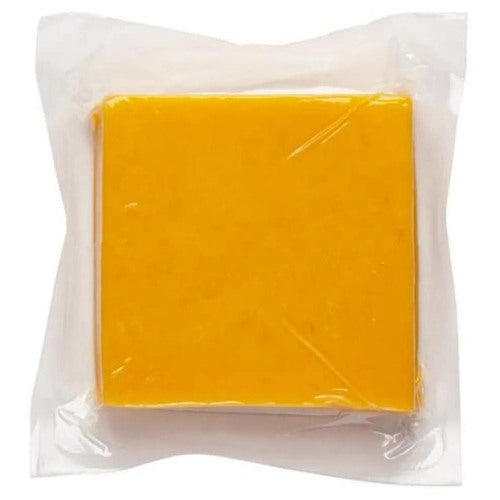
Cheeses
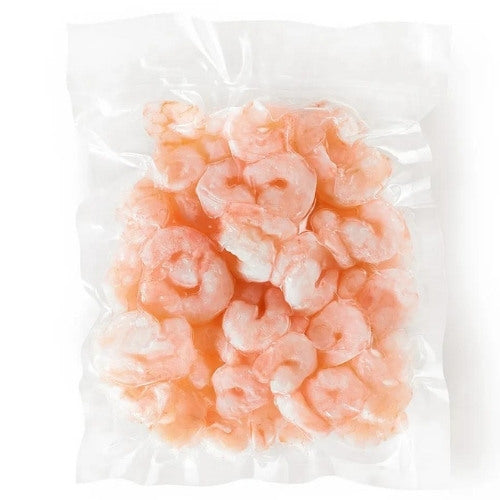
Fish/Seafood
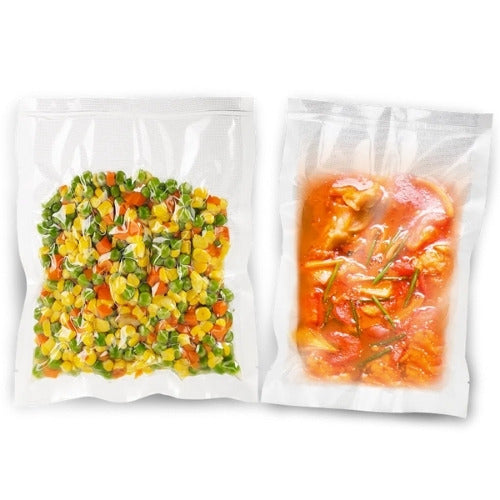
Prepared dishes/Sauces
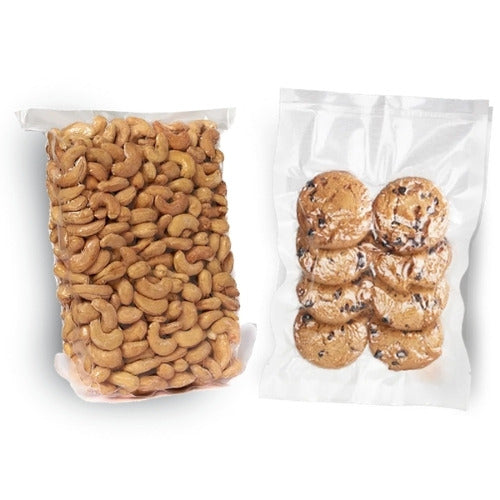
Snacks and crackers